

Agricola de Cologne – encoded excellence in art

static, moving & interactive images – Internet based art, videoart, photography, sonic art-
focussed on the topics „memory“ & „identity“
Agricola de Cologne
has lived and worked as a freelance artist in Cologne since 1981, and since 2000 he has worked exclusively with new media as an artist and curator. In 2010 he developed NewMediaArtProjectNetwork://cologne, which was launched in 2000, into The New Museum of Networked Art – a new type of museum that – dedicated to an international artist community that has been developing since 2000 – realizes a variety of projects in the field of digital art with static, interactive and moving images, as well as non-visual art forms (sound art) in exchange between self-created, virtual and physical spaces of international cooperation partners such as museums, public galleries and festivals.
The main contexts of his experimental artistic/curatorial activities are/were JavaMuseum (for internet-based art) 2000–2010, SoundLAB – sound art projects 2004–2024, CologneOFF/New Institute for Contemporary Art with international video art festival 2005–2024 and The 7 Memorials for Humanity 2001–2024.
In addition to curating as an independent art form tailored to his personality, Agricola de Cologne is involved in his own audio-visual and intermedial art projects.
He has directed/curated Alphabet Art Centre @ The New Museum of Networked Art since its founding in 2020 – a forum for temporary exhibitions of art with moving images and non-visual forms of expression.
Director & chief curator
The New Museum of Networked Art (2000 – )
artvideoKOELN (2005 – )
CologneOFF – International Festival Network (2005 – )
A Virtual Memorial Foundation (2000- ) – including the major projects
– Violence Online Festival (2003-2006)
– [R][R][F] Project (2003-2006)
– AVMCI – A Virtual Memorial Commemorative Interventions (2011-2014)
– The W:OW Project (2017)
– The 7 Memorials for Humanity (2018)
JavaMuseum – Forum for Internet Technology in Contemporary Art (2000-2010)
– 1st virtual museum for virtual art
VideoChannel – curatorial platform for art & moving images (2003-2012)
SoundLAB – sonic art projects (2003-2010)
Chief curator of
Audiovisual Art Collections @ The New Museum of Networked Art
include about 8000 art films & videos
– VideoChannel Collections including 60 curators from 40 countries
– CologneOFF Collections – 10 festival editions – 2005-2014
– artvideoKOELN Collections
– Collective Trauma Film Collections
– featuring Refugee Film Collection, SFC – Shoah Film Collection, Cambodia 1975-1979,
No More! Hiroshima-Fukushima
For Agricola de Cologne, curating, as well as networking forming the basis for curating, is representing his specific kind of art expression, it is virtual and physical art alike. Curating is no “job” and does not represent an institutional task based on scientific research, but an artistic action based on the need to approach art from a different point of view, but like doing any other kind of art, exclusively from his very personal point of view.
In fact, he started curating in 1990. Although he was following courses of art history during his university studies in Munich (1971-1974), he had, however, no education in curating, courses in curating did not exist, yet. He did it, like anything else, by doing, because the given situation required from him to curate. In this sense, he did it rather like a museum curator without the ambition to do an artistic action via curating.
Agricola de Cologne’s curatorial activities can be divided in two parts 1990-1994 and 2000-

In 1989, he started the Project “German Re-unification” on 9 November 1989 by founding ARCHA Society Foundation (ARCHA e.V. – Archives and Research for Contemporary Humanism and Art), which he was running as its President and curator until 1994.
He organised and curated three major projects for ARCHA Society
Patronage The Prime Minister of the Free State of Saxony – Prof. Dr. Kurt Biendenkopf
.

Starting in 2000 his third life from point zero, dedicated to the new artistic (electronic) media, using the Internet as an artistic medium was automatically enforcing curating as a primary activity. Agricola de Cologne was combining all kinds of responsibility in one person, the programmer, the designer, the director, the artist, the curator, the public relations manager, thus the entire staff of a production company or museum etc. This aspect that everything Agricola de Cologne was doing since 2000, was exclusively the work of one single person, whereby his project, as typically Internet specific works, were, differently from usual art works, ongoing after their initialization, so the creator was always running different projects and platforms, at the same time, influencing each other progressively.

When Agricola de Cologne initiated himself as a brand and virtual artist, he had no idea about the consequences. In one way, he actually wanted to continue his ideas of an artistic commemoration on a virtual level in Internet, which had started in physical space some years years ago. On 1 January 2000, he released as his first artistic manifestation on the net ” A Virtual Memorial”, the counter part to his physical project “A Living Memorial” (1995-1998), but expanded to a global level adressed to the online audience on all parts of globe. He started a kind of diary posting at first daily, later weekly and monthly his reflections about incidents global-wide which he was thinking to be worth to be commemorated by creating smaller Internet based interactive works. He initiated his first calls for artists participations, not being aware that he was starting curating by inviting the first artist to participate and contribute.
Projects like “JavaMuseum – Forum for Internet Technology in Contemporary Art, A Virtual Memorial or The New Museum of Networked Art give evidence of the ambition to simulate in Internet such established cultural structures by doing it in an Internet specific way via partcipatory and networking aspects, by including curators, artists and cultural institutions. Curating was not restricted to take responsibility for a physical art collection or an exhibition, but the contents, the artists, the curators, artworks, networking partners – institutions or organisations and not to forget, the virtual and physical space.
By realising his projects by inviting artists, curators and institutions he was continuously creating and generating virtual and physical artworks visually and sensually perceivable by the users. Via the interactivity of these projects, the users became curators, as well. In this sense, curating means for Agricola de Cologne also basically activating the user or viewer and eliminate the passive consumer position.
Although the curatorial activities during the first phase (1990-1994) had retrospectively seen, also highly interactive components by encouraging the audience and enforcing dialogue on different levels, they were nevertheless quite conventional compared with that kind of curating which the Internet was generating, enabling and enforcing, and Agricola de Cologne did that kind of curating not define, yet, as an art creating of itown, which he became aware only later. So, curating became part of his artistic concepts born from the necessity the Internet as a medium of art was generating.
One has to consider, when Agricola de Cologne started in 2000, only short time before, the Internet had become only popular, the computer was not recognized, yet, as a serious art tool, and the established cultural structures like art museums, were generally refusing the computer, the Internet and new technologies and the artists using these tools.. The Internet connection was at the lowest speed of 28 Kb-56 Kb, streaming video was still an utopia, nevertheless, Agricola de Cologne recognized immediately the relevance of streaming video, and generated from his own digital video sources a kind of low-tech streaming video by programming, which however became obsolete when the technology became more advanced some years later.

Of course, Agricola de Cologne was not the only artist or cultural activist, who was dealing with the virtual art works in virtual space, nevertheless projects like “JavaMuseum – Forum for Internet Technology in Contemporary Art” were pioneers in many concerns, as a new cultural structure such a project was curated in any concern, by designing a museum acting in virtual space for virtual art, designing interfaces and curating virtual space, developing the projetcs (departments) incorporating Internet based art works by active artists, keeping close contacts to the artists and encouraging them to continue, creating and maintaining networks. Until 2005, he curated in total 18 projects/exhibitions for JavaMuseum to be followed by two big shows in 2007 and 2010 . All of them are still running online, but were many times installed on monitors as a part of physical exhibitions. As a designer of culture, Agricola de Cologne got many privileges because he was dealing with the artists directly and it was obvious that the project of the museum or platform was representing an art project itself.

In 2003, Agricola launched on the day when the Iraq War began, his project “Violence Online Festival”, a curatorial challenge running until 2005. The global-wide effects of the manifestations of violence were representing an occasion to deal with violence and war, but the real cause was, of course, to reflect the own affection of violence via the art works by other artists and curating.

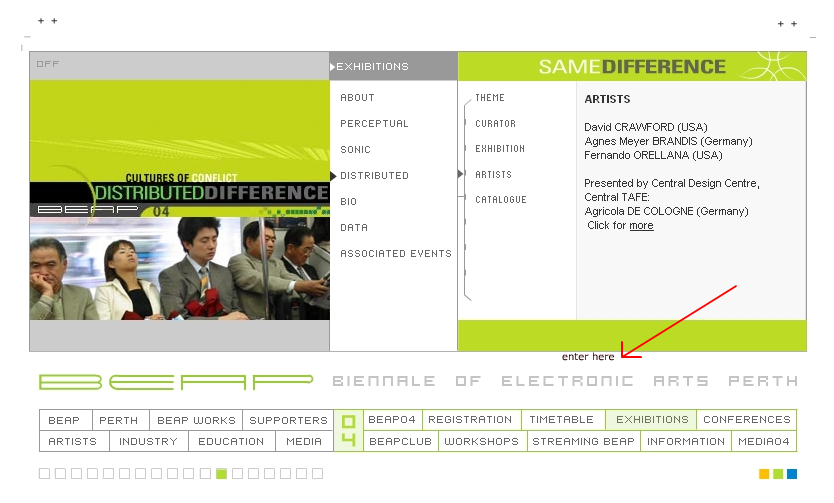
A particular mark is representing the year 2004 for Internet based art, it was a high time and cumulation point before its decline, and 2004 was for Agricola de Cologne a changing point, as well, because invited by Biennale of Electronic Art in Perth (Australia) he created the global networking project [R][R][F]200x—>XP – featuring different plafforms for different digital art media like VideoChannel – video project environments and SoundLAB – sonic art project environments.


While he realizsed in the context of SoundLAB until 2010 annually in total 7 huge sonic art projects, featuring the best sonic art works by the most prestigeous sound artists – giving evidence of his privileges compared with institutional instances, in VideoChannel he was realising dozens of curatorial projects, whereby Agricola de Cologne started curating curators from the beginning in 2004. which was at that time an enormous provocation, while it is usual nowadays. VideoChannel was also the starting point for a new type of curatorial activities in a new field “art and moving images, resulting in 2005 CologneOFF – Cologne Online Film Festival , to be renamed in 2007 to CologneOFF _ Cologne International Videoart Festival, a kind of mobile festival without a static festival location – a consequence was the multi-dimensional CologneOFF – International Festival Network – https://cologneoff.nmartproject.net – consisting of a wide range of internal festivals run by artvideoKOELN and the global-wide network of festival partners, so curating meant in trhis context also curating the festival partners.

Focussing his activities after 2005 on CologneOFF was representing also that big change and new challenge in the curatorial activities, realising projects in an exchange between virtual and physical space, generating that kind of dualism, which made Agricola de Cologne’s projects so successful on long term. It became also evident, that not all artists were following the open structures of the Internet, also because institutional instances and major festival structures were demanding a kind of exclusivity.
While during the first years (2000-2004) the virtual space of the Internet was the basic medium for Agricola de Cologne’s curatorial activities, the exchange between virtual and physical space required new curatorial strategies by including physical networking partners, so the new curatorial aspect became – curating networks, curating curators, festivals, organistions and create and generate new type of virtual & physical “images”.

Consequently, Agricola de Cologne established in 2005 his own publishing platform, named: “netEX – networked experience”, curating & promoting selected activities of “Third Parties”.
One of the major projects, created for an exchange between virtual and physical space was entitled: ://Selfportrait – a show for Bethlehem – a show for Peace,
a media art exhibition incorporating different digital media like video, photography, soundart, multi-media etc.
In 2009, he also launched, the project “Draft title: Shoah” and in this context “Shoah Film Collection” and as a result of it “Collective Trauma Film Collections” – http://dts.engad.org – world-wide unique merdia art contexts.

In 2005, artvideoKOELN international” was launched as an idea for the curatorial platform running all projects “dealing with art& moving images”, releasing later in 2009, CologneOFF as a nomadic pfestival roject in collaboration with networking partners around the globe, in this way and due its experimental character, CologneOFF became not only an artistic and curatorial, but also a networking challenge.
By starting his projects in 2000, Agricola de Cologne established his social network long before Mr. Zuckerberg estalished Facebook. Differently than Zuckerberg, Agricola de Cologne had never commercial ambitions, instead of this he created artistic structures for artistic purposes. Although the Internet as such was generating social networks through itself, Agricola de Cologne has to be considered as a pioneer in creating at the early stage of 2000, already his network, which ist still ongoing and growing, despite of countless followers on the artistic and commercial field.

A special relevance got the nomadic festival project “CologneOFF 20XX – videoart in a global context”, an experimental tour around the globe on the search for the ideal form of presenting videoart to an audience. It was an extraordinary curatorial challenge preparing and creating for each of the numerous annual venues an individual screening program, showing the artist’s/curator’s ambition to create virtual images inside of the audience via curating and activating the audience, this way.. In these terms, curating had not the intention to present the best films or videos or promote the most famous artists, but those videos and artists which fit at best into the artistic concept behind the respective screening program. It was intentional to disturb the audience this way, as well as giving unknown talents a chance to enter a most complicated art system. In 2012, he extended CologneOFF about some new formats like One minute films, animations and experimental documentary.

In 2012, Agricola de Cologne restructured and redesigned his project environment “A Virtual Memorial” as a foundation and a center for commemorative interventions – http://avmci.a-virtual-memorial.org, an experimental event framework for “Draft title: Shoah”, with manifestations in Riga, Warsaw, Vilnius, Phnom Penh, Milan, Timisoara, Tel-Aviv between 2012 and 2014.
After 10 years rapid and exciting media development, after 10 years being an active part and witness of new technologies in art, Agricola de Cologne transformed CologneOFF as an individual festival into the International Festival Network of the same name – consisting of an internal and external network – generating new curatorial platforms and event structures like artvideoKOELN – audio-visual experiences, d//light Darkness Into Light Festival or The W:OW Art Film and Video Festival.
Agricola de Cologne’s artistic/curatorial activities, and in this ways a carreer in this field, was not planned, but came up by actively doing following an internal creative necessity. It is now the task of “artvideoKOELN international” to work in future as an “operating system”, and as such a new challenging art work.
Many of his curated projects incorporate artists and other instances from many countries on the globe, and one might call Agricola de Cologne the first virtual and global curator, since he uses the communicating media for creating a world wide net of art activities and projects of different kind.
His projects are presented and realised in cooperation with numerous art institutions and organisations and he is also invited to join external networks by co-organize and co-curate festivals and media art exhibitions in different parts on the globe.
As his specific type of art working, curating takes a particular influence on the perception of the artworks through the audience, since they follow the classical idea of the “collage” resulting most complex and dynamic constructions of different identity and authenticity in the framework of an interactive context. But the way, he was curating during the past 15 years, eg. taking responsibility for art from a continuously changing point of view, means also consequently to return to his own physical art works one day under a completely different point of view., this is good for the art creations before 2000, as well as for those after 2000.
And a final note. Agricola de Cologne started operating from point zero in 2000, this means also in material terms.. Behind all activities is and was standing one single person, which was not paid to do a job, but was organising its own survival as an artist. While other artists were continuing painting, sculpturing or creating installations, Agricola de Cologne was exploring his abilities, possibilities and opportunities in new kinds of artistic fields. He used technology and exploring unknown territory in the same way as a tool, as a painter is using brush and colour for making a painting.
While after the initiatization of Agricola de Cologne as a brand on 1. January 2000, nobody knew what would come, and at least the artist hinself, now after more than 15 years, it can be stated, that “Agricola de Cologne” made an unusual carreer as a virtual artist and curator, and only now actually one can speak of “Agricola de Cologne” as a project itself – and consequently – the artist was curating himself very successfully.

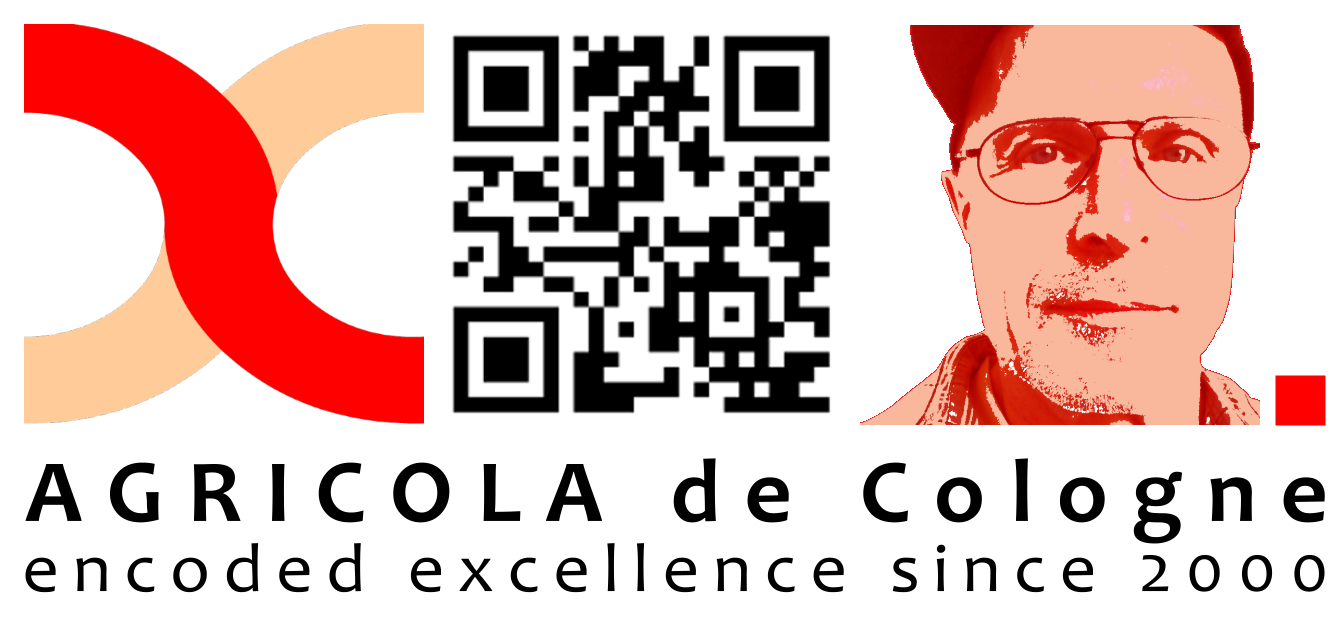
Agricola de Cologne – the art brand
Since 2000, Agricola de Cologne is the brand for the multidisciplinary media artist, media art activist, curator & festival director of the same name located at the city of Cologne, but represents simultaneously also the brand for his specific artistic program.
Agricola stands for the philosophical, humanist ideas which form the context and the basis of the artist’s creative work.
In Renaissance times educated people often changed their German family names into Latin, so the German name “Bauer” (english = farmer) was changed into the latinized “Agricola”. Several painters, philosophers and humanists by name “AGRICOLA” were contemporaries of Martin Luther, for instance the famous Michael Agricola.
The city of Cologne, founded by the Romans more than 2000 years ago, represented for centuries a city of culture and art, and nowadays the city of the media, hosting an important European film and TV industry. Thus, Cologne stands for deeply rooted history, as well as for a vivid future orientated environment for art and media.
As a brand, Agricola de Cologne was inspired by another brand which is widely identified with Cologne, i.e. “Eau de Cologne”, and stands for an artistic program rooted in humanist ideas, humanity and the awareness for history, but focussed on innovative and experimental ways using art and media.
The physical artist behind “Agricola de Cologne” existed before 2000 already, when he started his artistic career as “Wilfried Agricola” in 1980, but this artist died in 1998 caused by a terrorist attack, which destroyed also a part of his physical artistic work.
When the artist was reborn on 1 January 2000, it was as an artist brand, “only”. He started as a virtual artist from point zero on a new field of artistic activities, which is called these days “new media”, “digital art” “electronic art” etc, defining in his personal case the term of being an artist in a completely new way.
In the gigantic Universe of New Art he is creating, eg. The New Museum of Networked Art aka ´ [NewMediaArtProjectNetwork]:||cologne, he is continuously changing and redefining his identities and expressions as an artist, i.e. programmer, multi-media developer, curator, exhibition designer, festival director, director of films and videos and much more, but also the projects and platforms he is creating. For instance, he is not only the director of JavaMuseum, but he is also JavaMuseum as the instance it is representing, like he is always the executor and responsible for his work and the work at the same time. In this way, he is recreating himself permanently.
His projects and activities, all labeled with “Agricola de Cologne”, simulate and encode a fictive reality.
Agricola de Cologne is “living” his virtual life (as a brand) in the Internet like an open book, everything he created in the context of his brand (and this is really everything) can be reviewed, perceived and experienced online by all interested users.
Only a few times a year, “Agricola de Cologne” is manifesting himself in physical space as a physical person, whereby it is not clear what this physical manifestation really represents and means, for himself and the audience.
The first name “Wilfried” was added to the name of the brand in order to make it easier to deal for users and partners with the virtual and physical status of the artist. In this way the name “Wilfried Agricola de Cologne” is partially physical, as well as partially virtual.

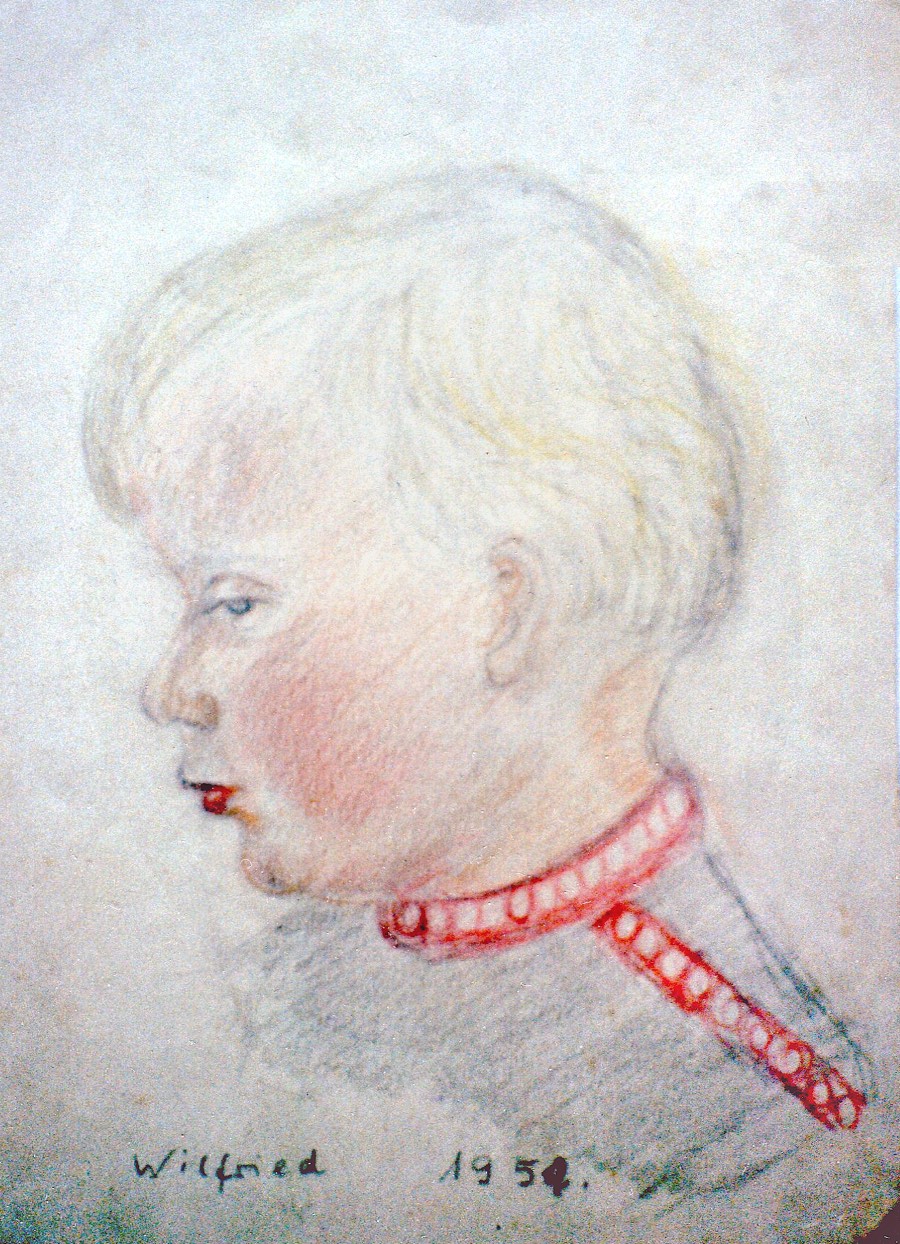

Time Line
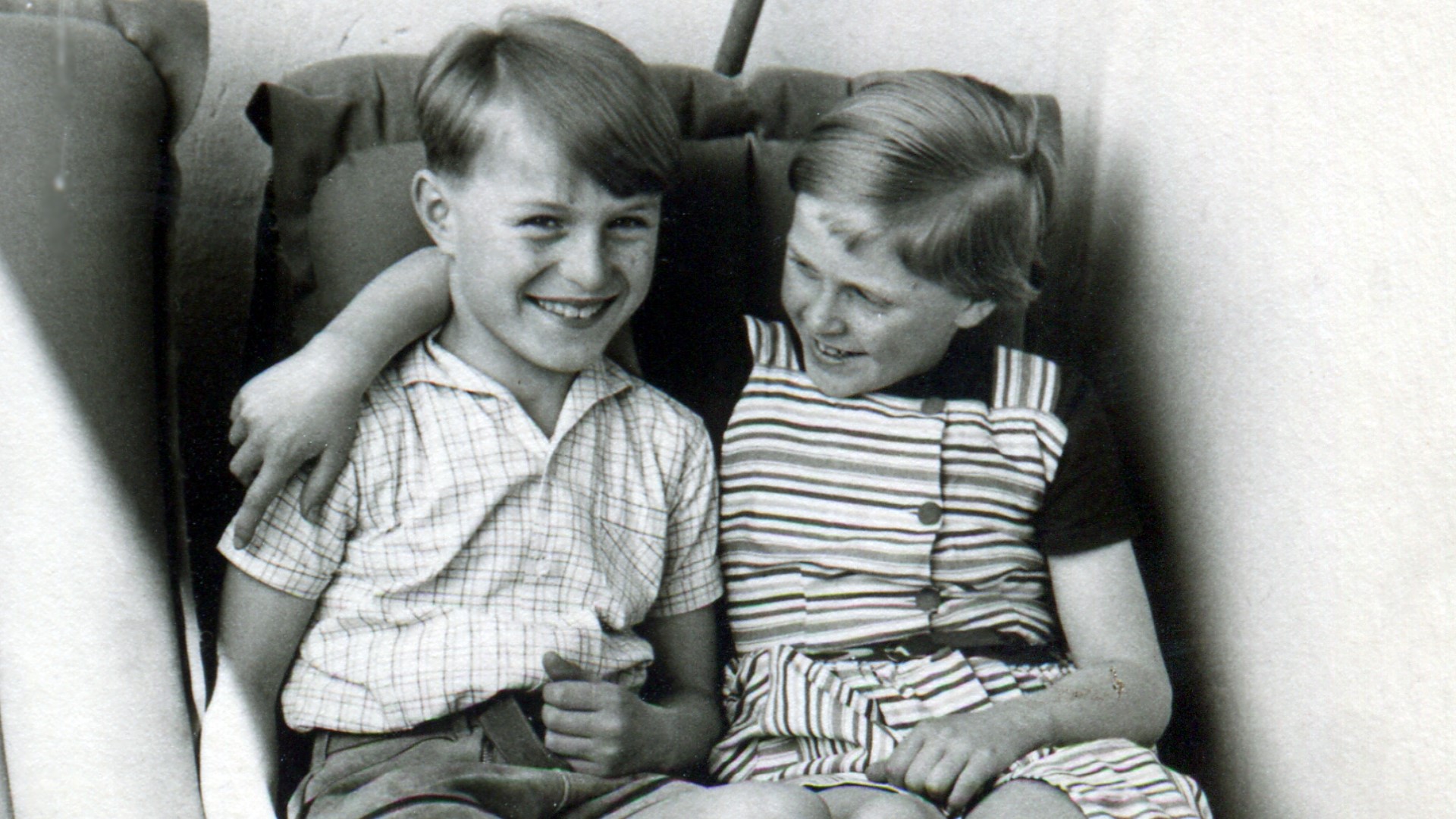
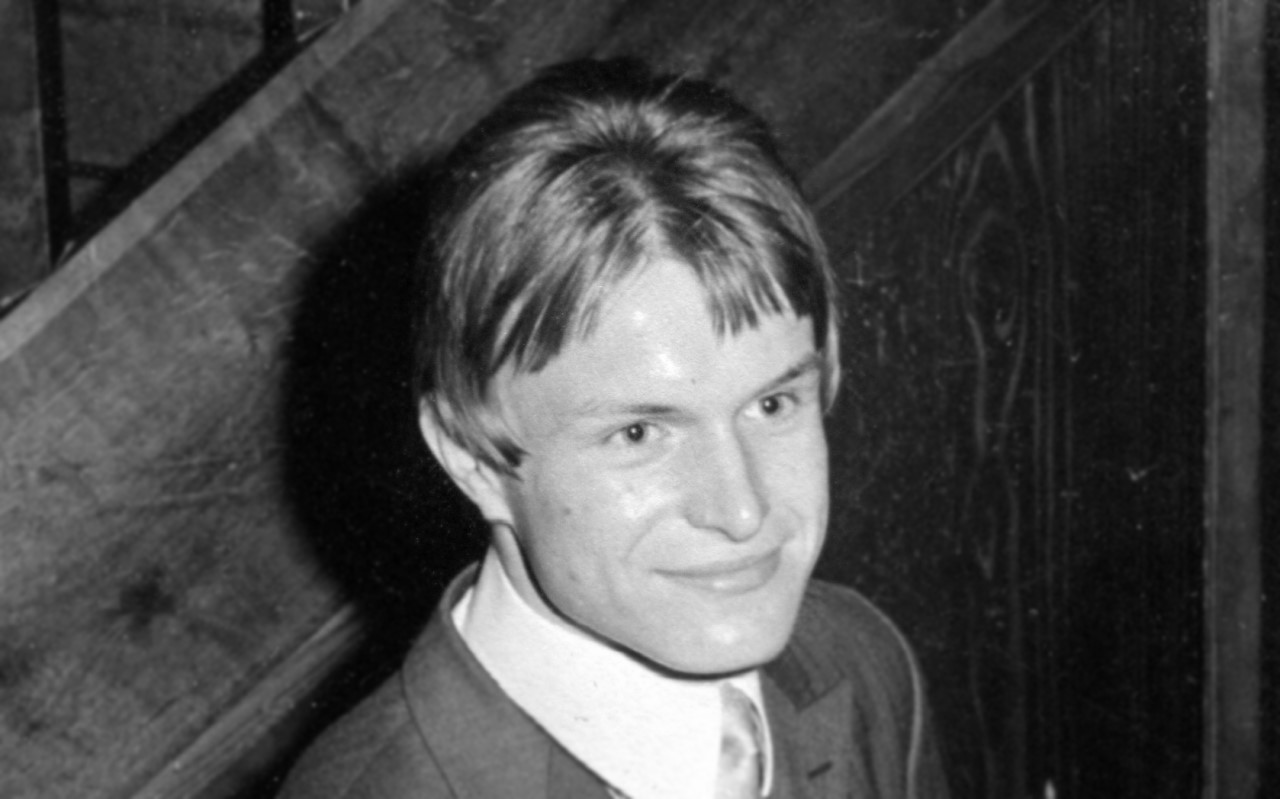
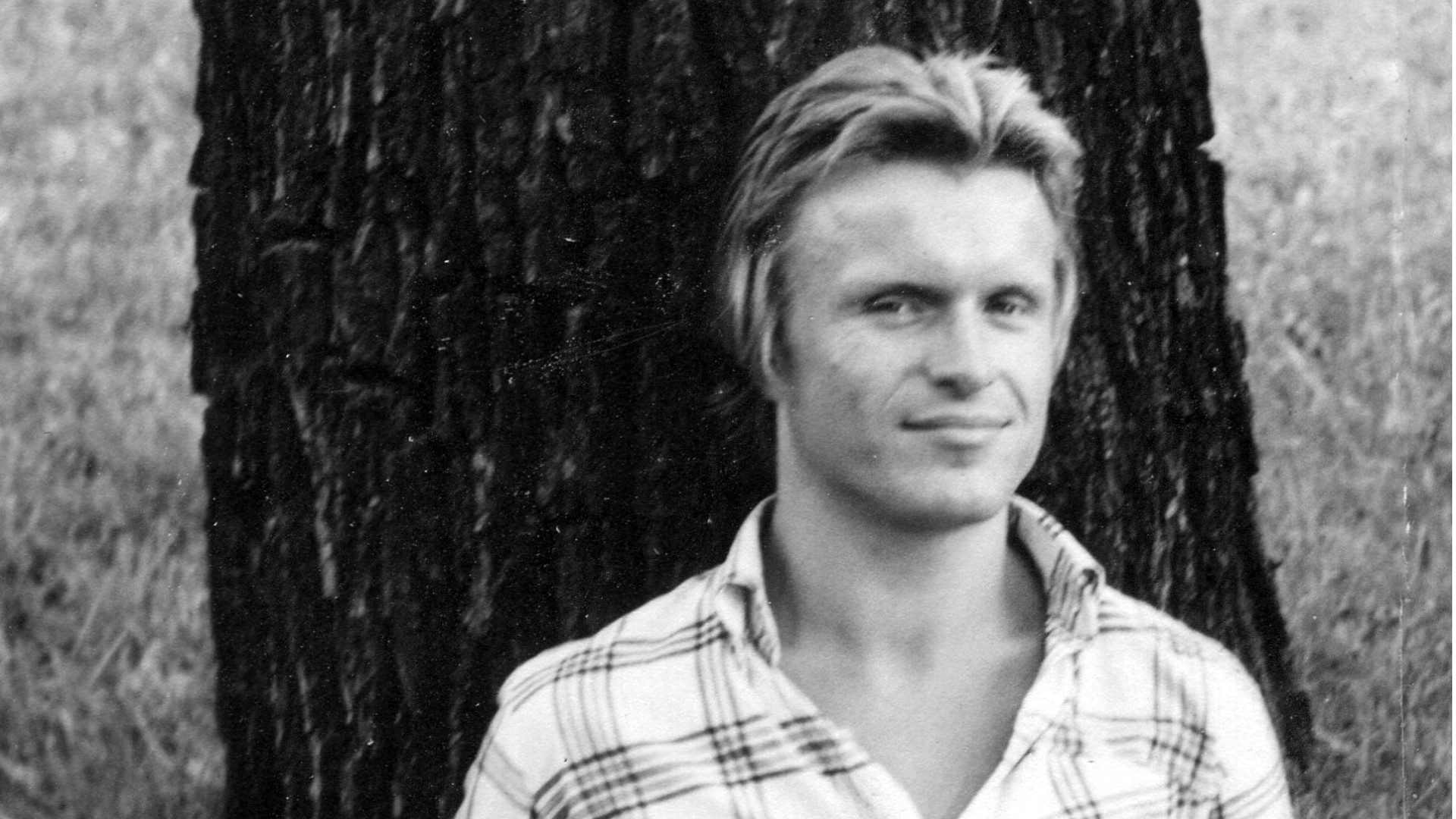
The course of Agricola de Cologne’s life is marked by particular living phases due to moving to and living at different places on one hand, and on the other hand by different working phases, lasting always about 7-8 years, when the artist started new artistic challenges.
Fundamental influence had traumatic experiences, which were directing the artist into new directions and artistic fields: 1998 – the terror attack catapulting the artist in a months lasting coma, causing a fundamental loss of the affinity to the “material” and his re-creation as a virtual artist. The years 2008 and 2009 were not less traumaticizing, in 2008 the artist’s mother’s stroke caused a family desaster, and shortly afterwards the artist was physcially so heavily attacked in October 2008 in Caracas and a few weeks later in 2009 in Casablanca causing such traumatizations, that when He returned to Cologne, he was set into an artificial coma for many weeks in order to re-activate his self-healing powers. In 2014, the circumsstances of his mothers death were causing a final break with his family.
While the artist was encouraged from a child by his parents to deal with art, in 1965 his artistic life started when he was given a canvas and oil colors on his birthday. The first phase of artistic working lasted until he started working professional 1980, initiating the second phase lasting until 1988. It was focussed on using water colour and pastel as painting tools, which does not sound really exciting, but he developing his very personal use of thse artistic media and a very rich oeuvre transforming his philosophical ideas into a very individual visual language.
The year 1989 was marked by a re-orientation, whereby the fall of Berlin Wall directed the artist to new directions more or less by coincidence. He founded 1989 the charitable ARCHA Foundation. as its President he travelled in Eastern Europe which was forming the basis for the following Memorial Project – 1000 Years, 50 Years and still so Terribly Young” and a new type of physical art working using different 2D and 3D media in installations. 1998 this kind of art working was stopped by a terror attack which was destroying a basic part of this artistic project.
After returning to life from a many months lasting coma, the artist re-created himself on 1.January 2000 under a new name and a virtual status as – Agricola de Cologne, focussing exclusively on new media and technologies and a new type of art working in form of curating. While he was creating until 2007 a huge number of individual art projects, the 2nd phase starting in 2008 was solely dedicated to curating art & moving images, respectively audiovisual media as a festival director.
According to this obvious rhythm of phases lasting 7-8 years, the year 2015 is representing again a re-orientation.
The direction to return again to physical art work in shape of painting, 3D objects or installation is unfortunately currently no option, after the artist’s health was attacked in Februar 2017 by an heavy accident causing the partial paralization of the left bodyside.
So, the path, he is still able to follow during the coming years, is related to the project, he initiated just a few weeks before the accident, entitled: “The W:OW Project – We Are One World” – http://wow.engad.org – dealing with the Present & Future of planet EARTH under the influence of the human species – integrating previously initiated media art contexts, as well.
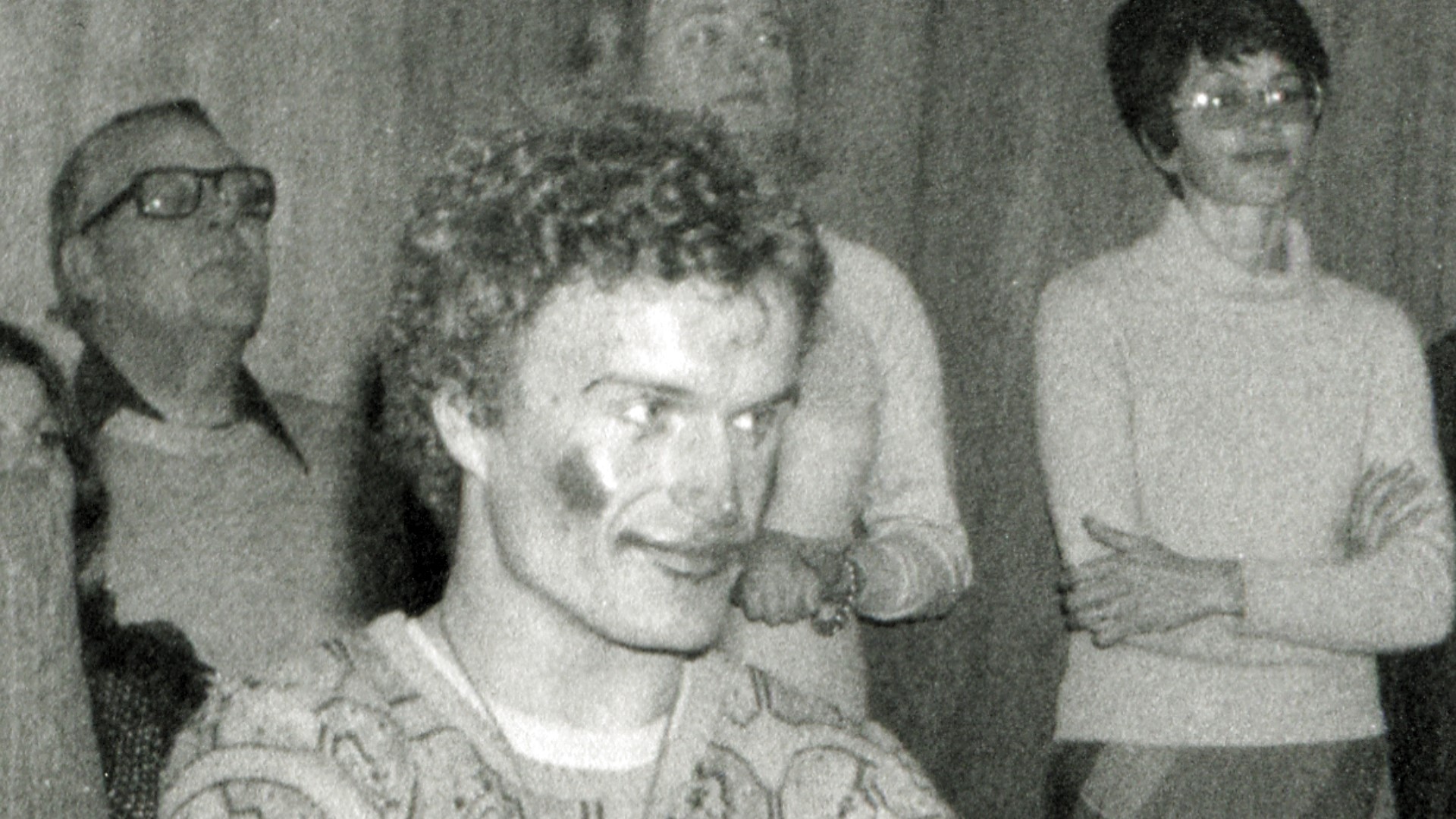
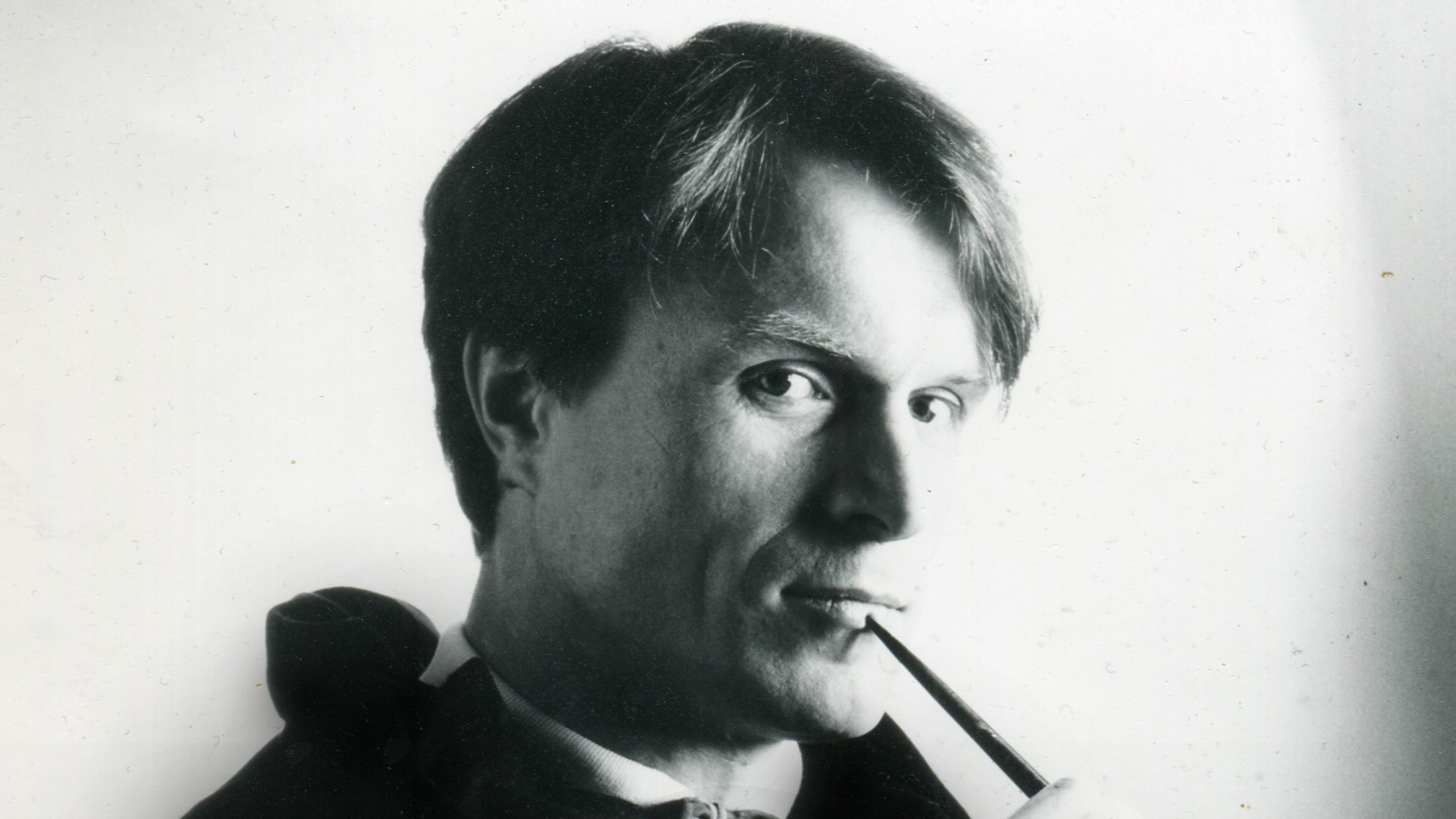
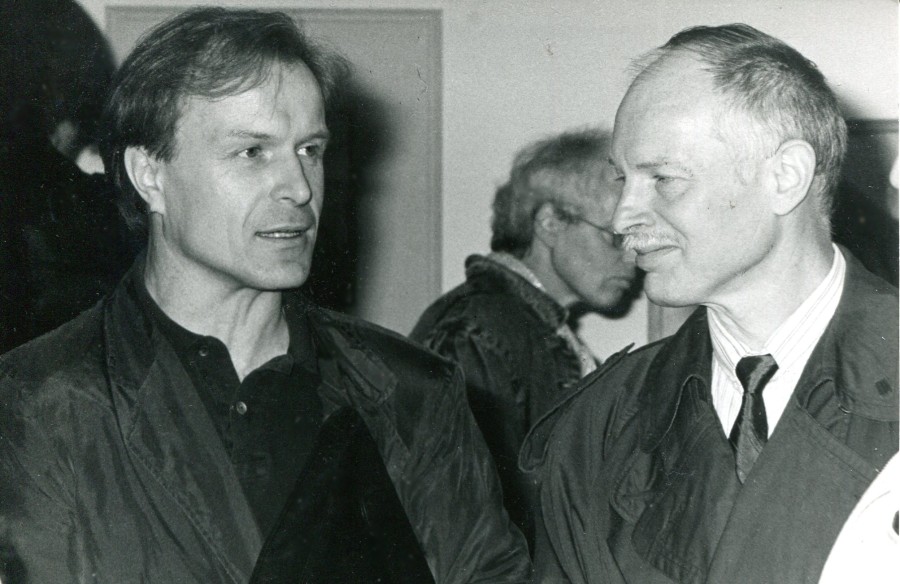
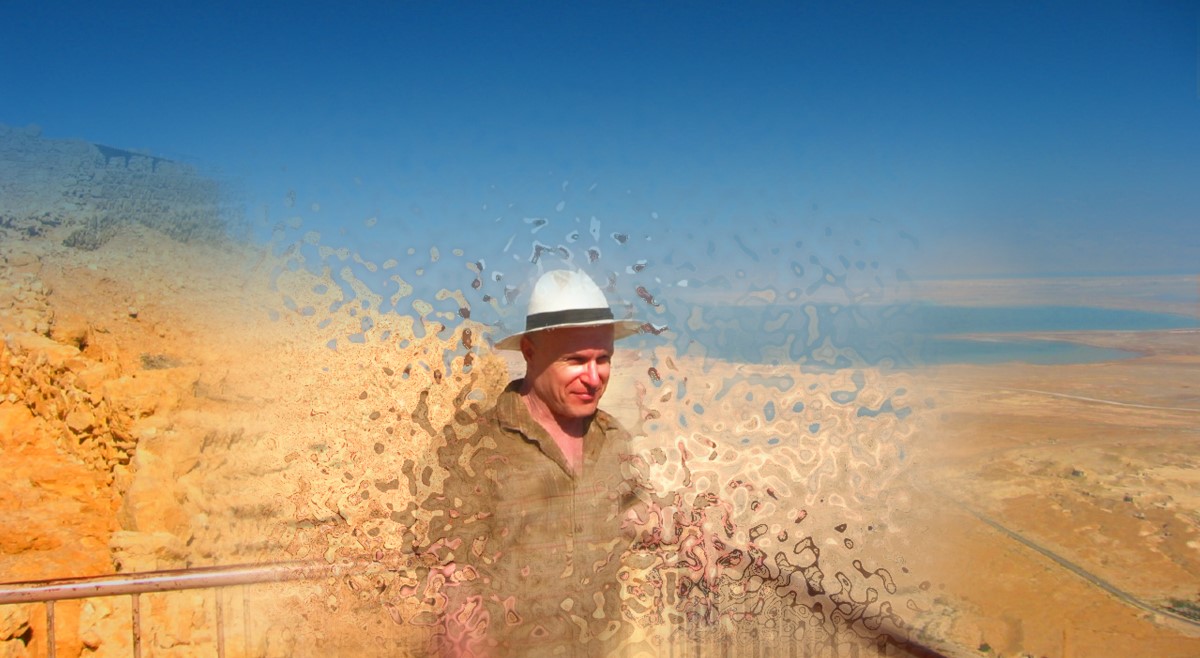
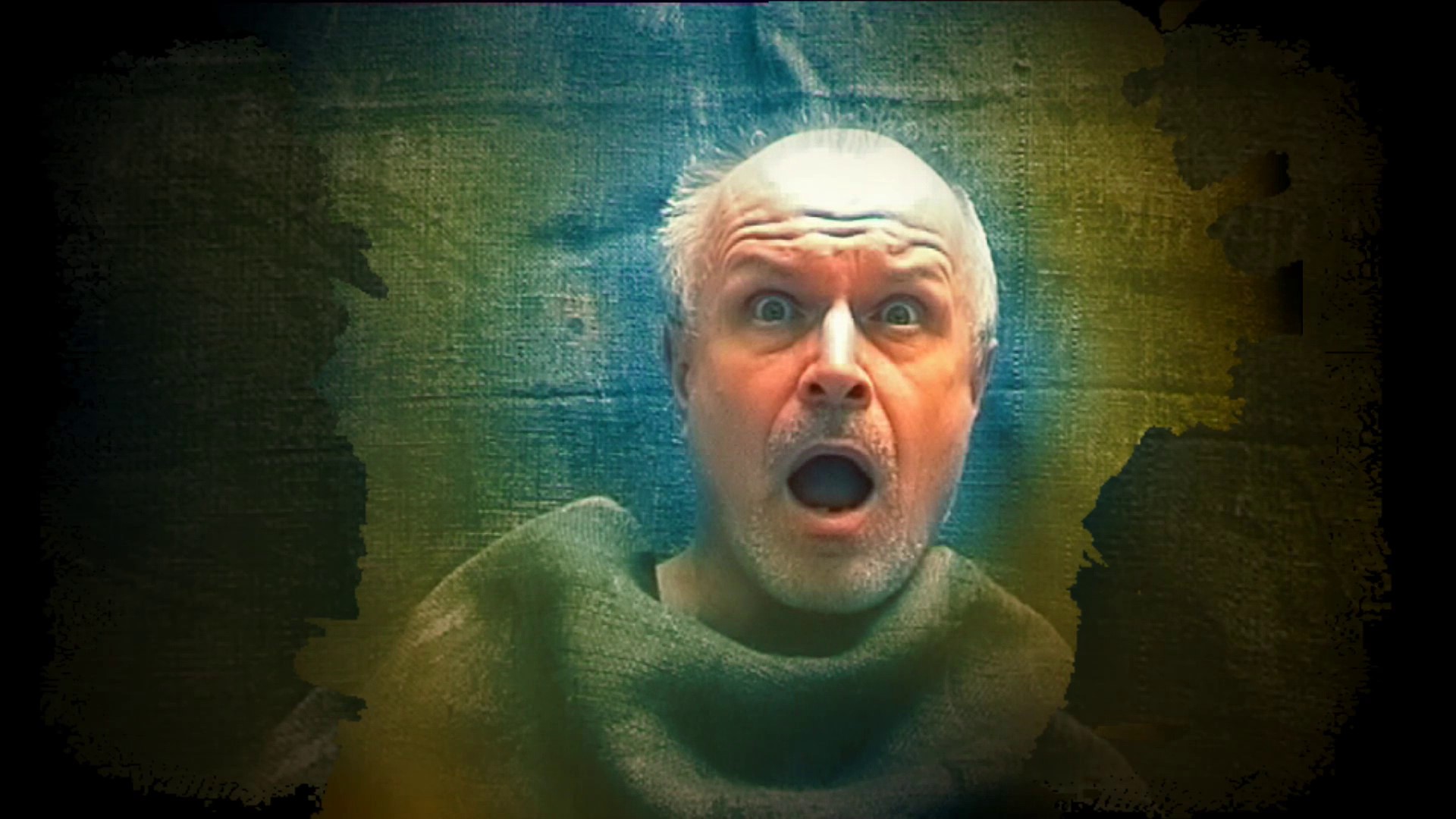
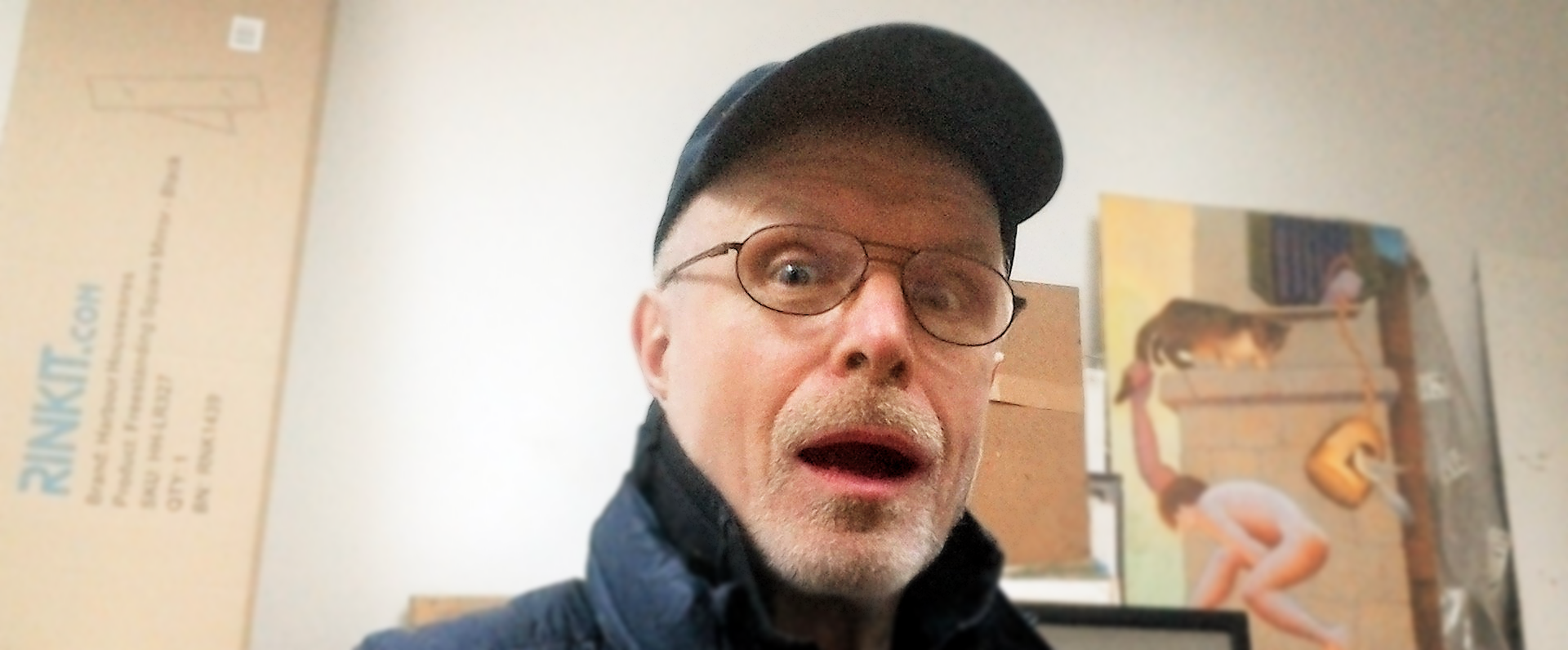


For his curatorial activities he created his own operating system – artvideoKOELN international .
Since 2005, his main focus of activities was rooted on “art & moving images”. He created in 2005 CologneOFF – the International Festival Network – http://coff.newmediafest.org and was running 10 years (2005-2014) CologneOFF International Videoart Festival by realiting 10 festival editions
The New Museum of Networked Art
is representing the “divisionistic image” consisting of countless dots or a multi-dimensional sculpture in form of the individual and networking structures on different levels Agricola de Cologne created since 2000 incorporating Agricola de Cologne as a project itself. It includes also the shadow of the second life (before 2000).
In this way, Agricola de Cologne is standing also for a broad bandwidth of dynamic curatorial contexts he is initiating in physical and virtual space on the listed platforms, the co-curator and co-organiser of external festivals and exhibitions, the jury member of divers festivals, and not to forget the designer of a cross-platform culture.
networked collaborations in 120 countries since 2000
– artists network include more than 5000 artists from 80 countries
– curators network include more than 80 curators from 40 countries
– institutional network with festivals & cultural institutions including
more than 800 venues in 120 countries
References

Agricola de Cologne & his projects have been supported by

1991
Prof. Dr. Kurt Biedenkopf
Prime Minister of Free State of Saxony (Ministerpräsident des Freistaates Sachsen)
Matthias Lechner
Mayor of the City of Goerlitz ( Oberbürgermeister der Stadt Görlitz)
International ARCHA Conference Goerlitz/Germany
1995-1999
Ignatz Bubis
President of Central Jewish Council of Germany (Präsident des Zentralrates der Juden in Deutschland)
A Living Memorial Kunsträume
Dr. Frank Michael Pietzsch,
President of Parliament of Thuringia/ Landtagspräsident Thüringen
Presentations “A Living Memorial Kunsträume” Thuringia 1996 (Präsentationen Thüringen)
W.Ch. Steinbach
President of District Council Leipzig (Regierungspräsident Leipzig)
Presentations/Präsentationen “A Living Memorial Kunsträume” Leipzig 1996
Ulrich Schmid
President of Parliament of Northrhine-Westphalia ( Landtagspräsident NRW)
Presentations/Präsentationen “A Living Memorial Kunsträume” Nordrhein-Westfalen 1998
2012-2015

European Parliament
A Virtual Memorial Riga 2012 (Latvia)
A Virtual Memorial Vilnius 2013 ()Lithuania)
A Virtual Memorial Warsaw 2013 (Poland)
A Virtual Memorial Milan 2014 (Italy)
Municipality of Milan, Province of Milan, Region of Lombardia and
Contemporary Documentation Centre for Jewish Culture Milan
A Virtual Memorial Milan 2014 (Italy)

1987
Aufbruch und Befreiung @ Simultanhalle Cologne
City of Cologne, department of culture
1991
International ARCHA Conference Goerlitz/Germany
Ministery of the Interior (Innenministerium) 1991
Ministerium für Kultur und Wissenschaft Freistaat Sachsen Dresden/Germany (1991)
City of Goerlitz, City of Zittau
1995
1000 Years, 50 Years and still so terrible young (Memorial Project) @ Municipal Archives
City of Cologne, department of culture
1998
A Living Memorial Spaces of Art (Memorial Project)
City of Cologne, department of culture
2006
Media art project [R][R][F] in Cologne
State of Northrhine-Westphalia
2008
Residency October 2008 – Maracaibo/Caracas
Ministery of Culture Caracas/Venezuela
2011
Timisoara Short Film Festival
German Cultural Institute, Goethe Institute, Ministery of the Exterior (Bundesaußenministerium)
2012
Residency May/June Riga
Culture & Arts Project NOASS
A Virtual Memorial Riga 2012 (Latvia)
Culture and Arts Project NOASS, Ministery of Culture Riga, US Embassy in Riga, Swedish Embassy in Riga, Austrian Embassy in Riga
Embassy of Israel in Riga, State of Israel Ministry of Foreign Affairs
2013
A Virtual Memorial Vilnius 2013 (Lithuania)
Lithuanian Jewish Community, Lithuanian Film Center, Vilnius Municipality
Italian Culture Institute Vilnius, Institut Français Vilnius
Austrian Embassy Vilnius, Swedish Embassy Vilnius, US Embassy Vilnius, UK Embassy Vilnius,
Israeli Embassy Riga, State of Israel Ministry of Foreign Affairs
A Virtual Memorial Warsaw 2013
Germany Embassy Warsaw
2014
A Virtual Memorial Timisoara 2014 (Italy)
German Cultural Institute Timisoara/ro

Goethe Institut Sofia/Bulgaria (2003)
Goethe Institut Bratislava/Slovakia (2003)
Goethe Institut Bangkok/thailand (2004)
Goethe Institut Sao Paulo/Brazil (2005)
Goethe Institut Montevideo/Uruguay (2005)
Goethe Institut Hongkong (2009)
Goethe Institut Rabat/Morocco (2009)
Goethe Institut Ukraine Kiev (2011)
Goethe Institut St.Petersburg/Russia (2011)
Goethe Institut Munich/Headquaters (2011)
Goethe Institut Bangkok/Thailand (2012)
Goethe Institut Novosibirsk/Russia (2012)


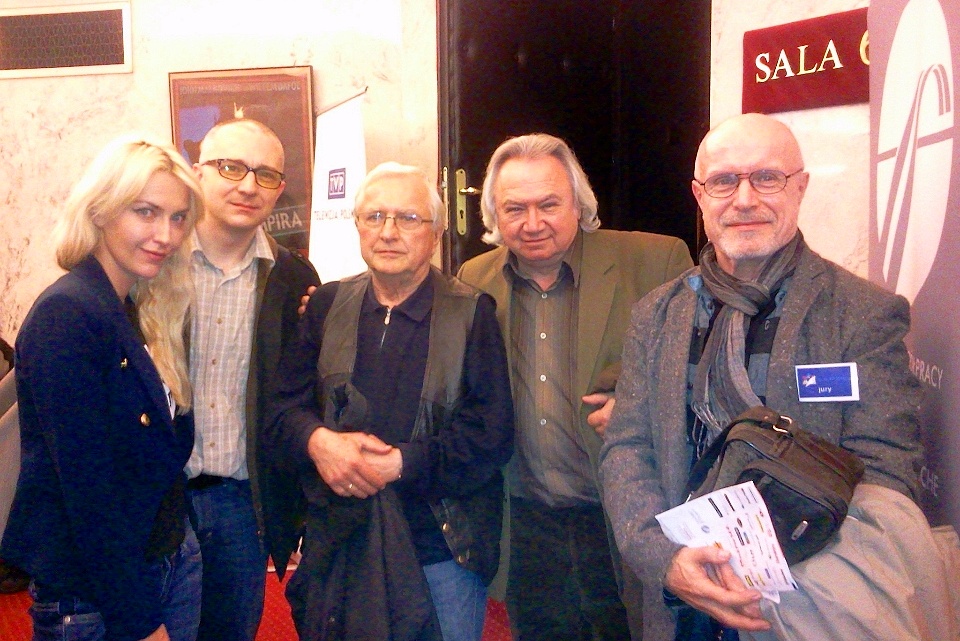
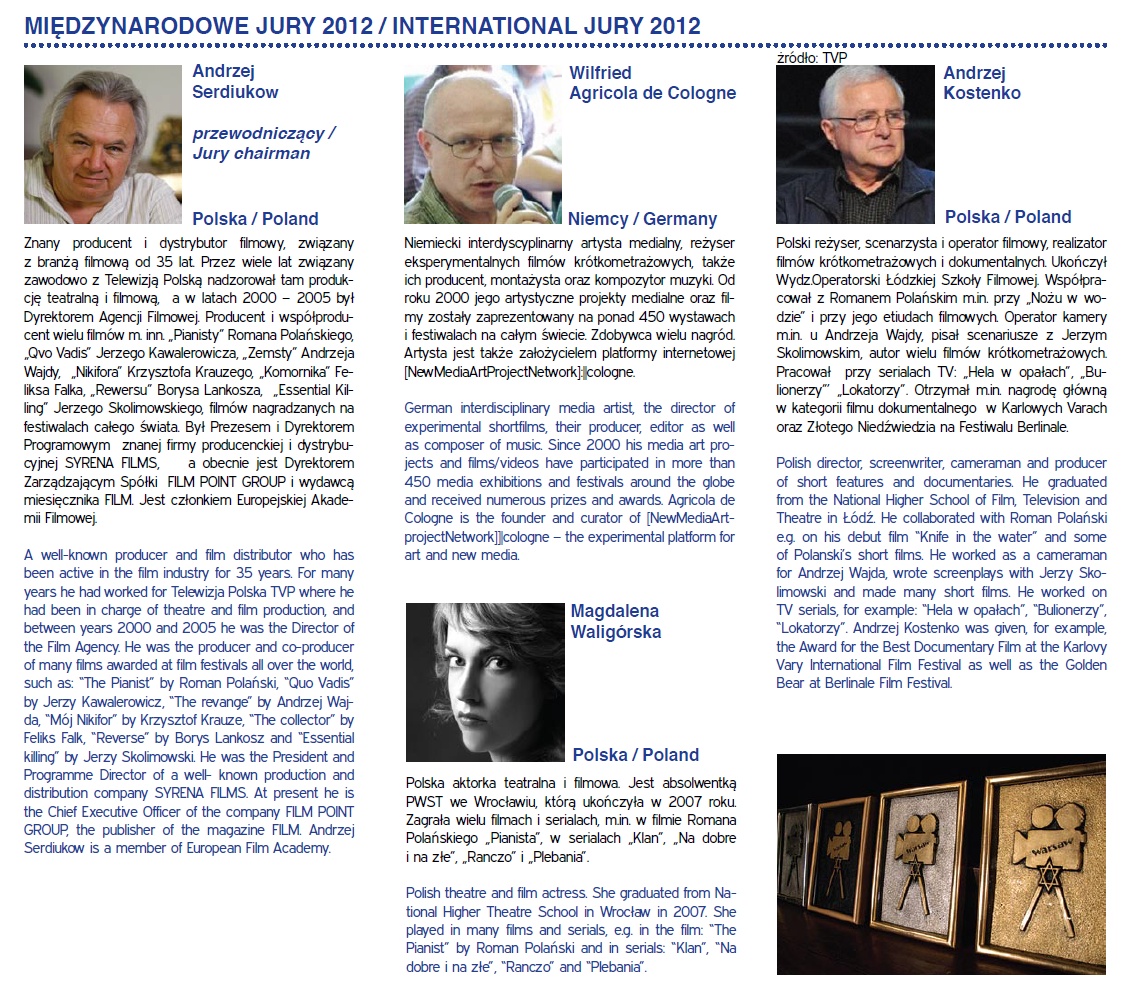
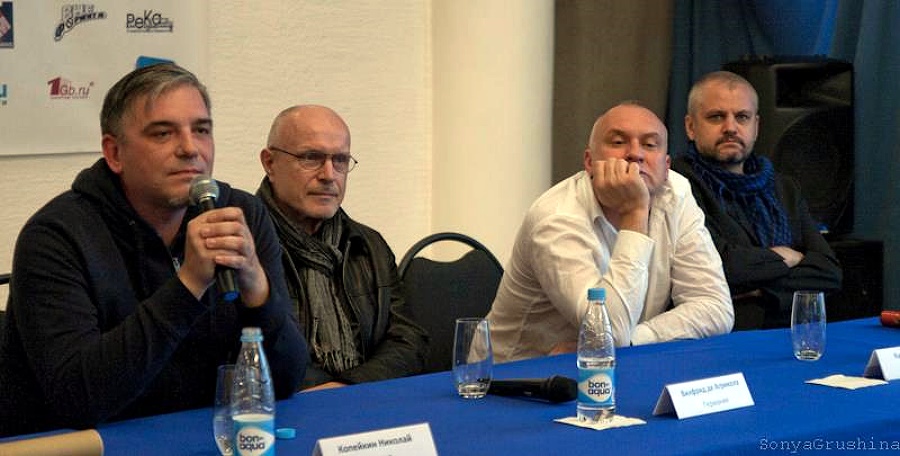
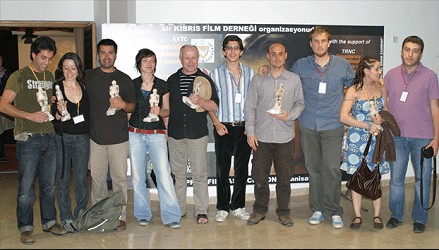
Warsaw Jewish Film Festival 2012 – The Jury & the festival director – (from left to right) Magda Waligorska, Daniel Strehlau, Andrzej Serdiukow, Andrzej Kostenko & Wilfried Agricola De Cologne
Agricola de Cologne was a jury member of following events:
2015 InShadow – International Video & Performance Festival
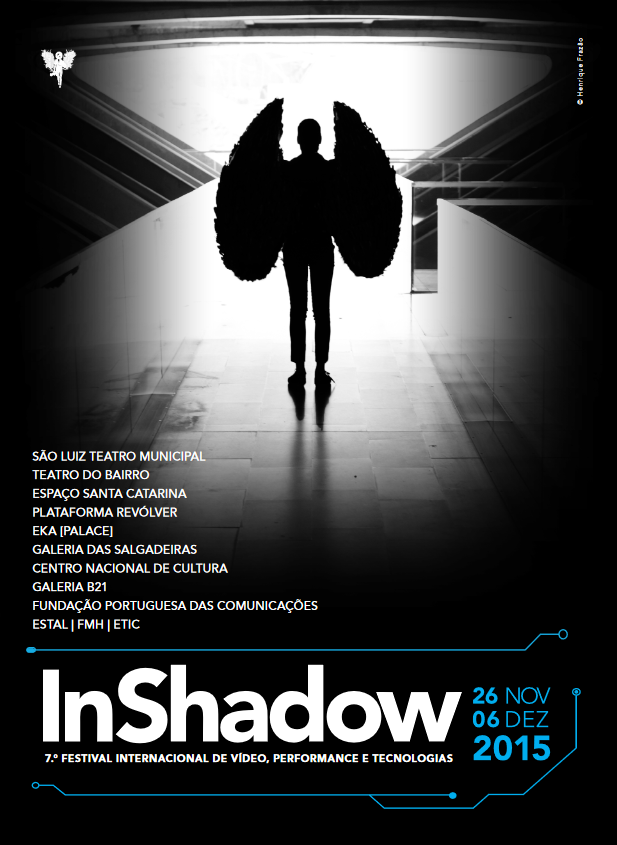
InShadow – International Video & Performance Festival
Lisbon/Portugal – 26 Nov – 6 December 2015
&
CologneOFF 2015 Portugal II
@ InShadow Festival Lisbon
26 Nov -6. Dec 2015
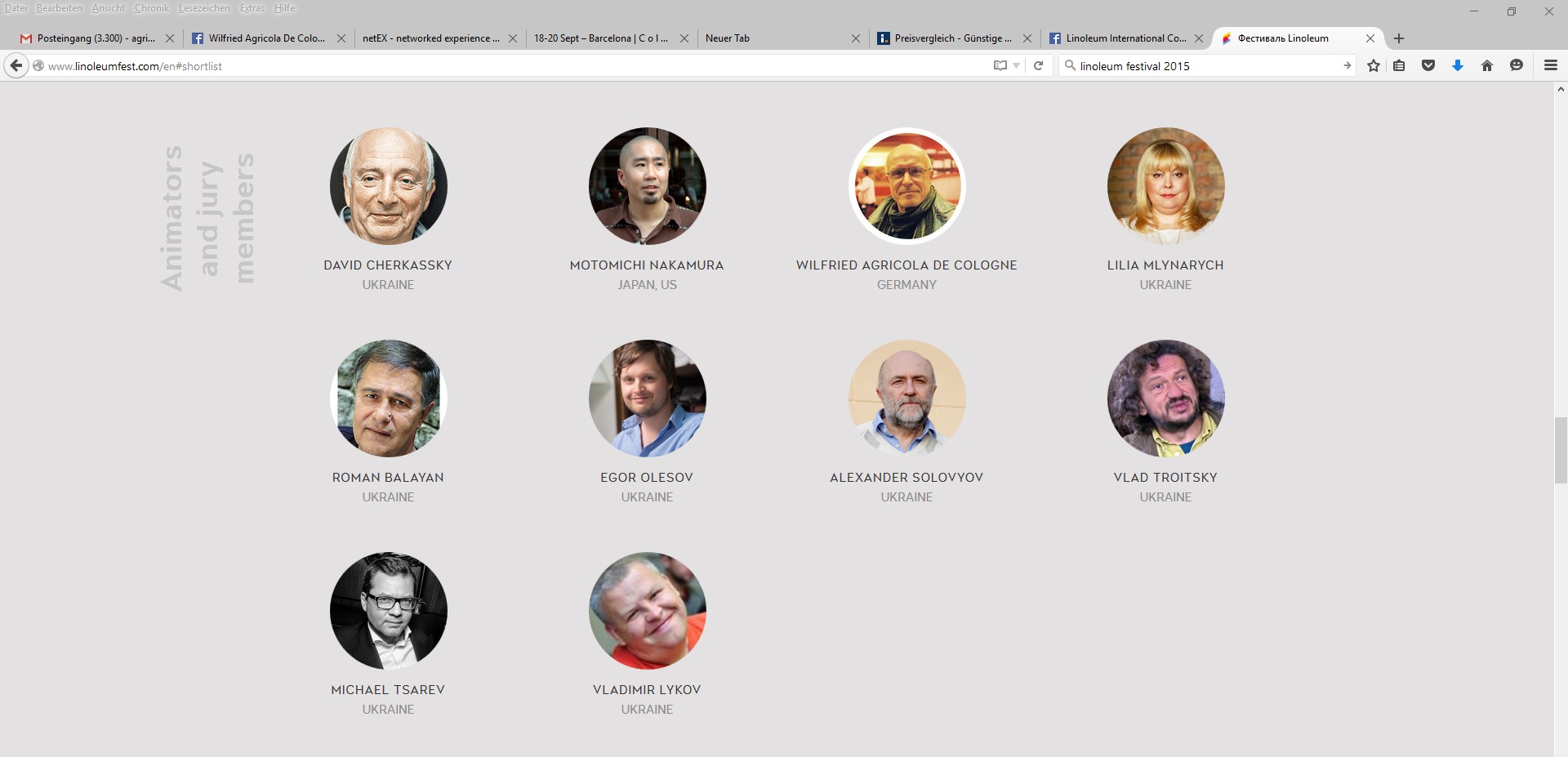
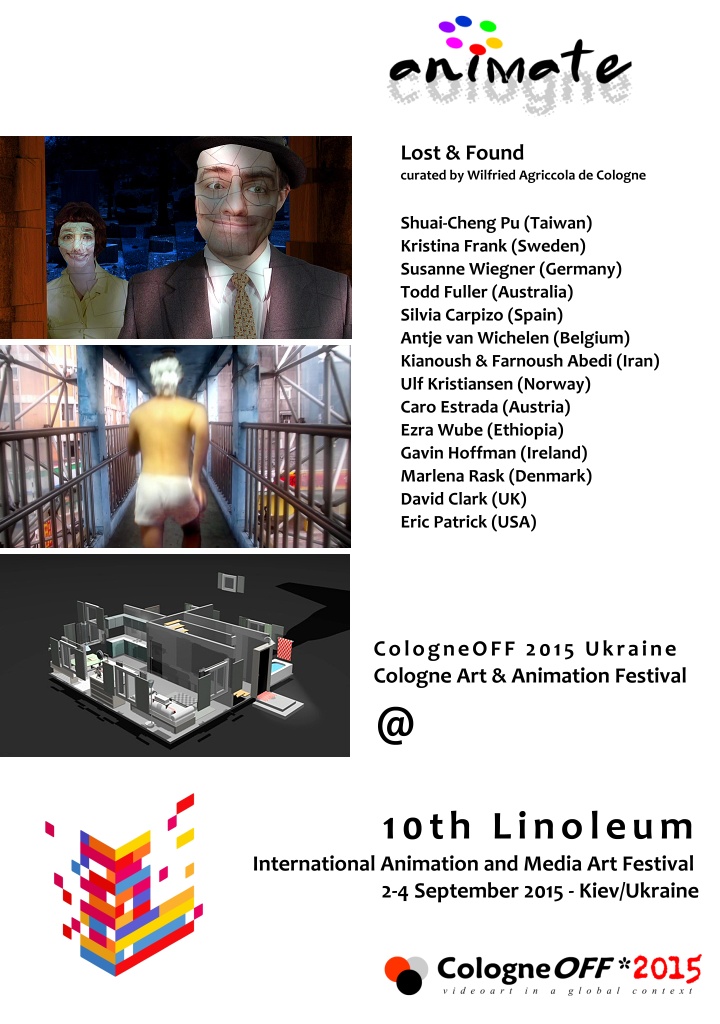
2015 Linoleum – International Animation & Media Art Festival
Kiev/Ukraine – 3-6 September 2015
2012 Warsaw Jewish Film Festival
Warsaw/Poland – 25-30 October 2012
A Virtual Memorial Warsaw 2012
dedicated to the victims of Warsaw Ghetto 1940-1943
SFC – Shoah Film Collection
@ Warsaw Jewish Film Festival (WJFF)
25-30 October 2012
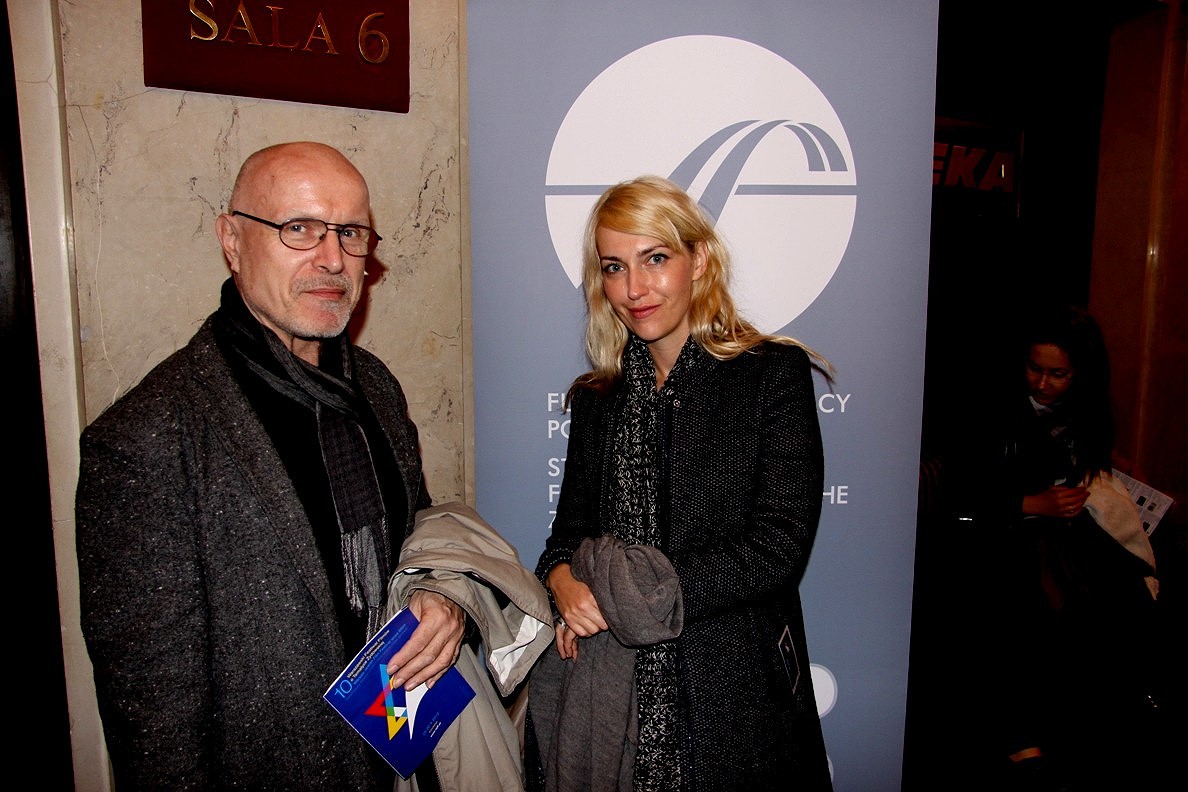
Warsaw Jewish Film Festival was featuring — \\A Virtual Memorial Warsaw 2012// – as the third event in form of the series
during the festival, and as a special intervention – Wilfried Agricola de Cologne is appointed member of the festival jury.

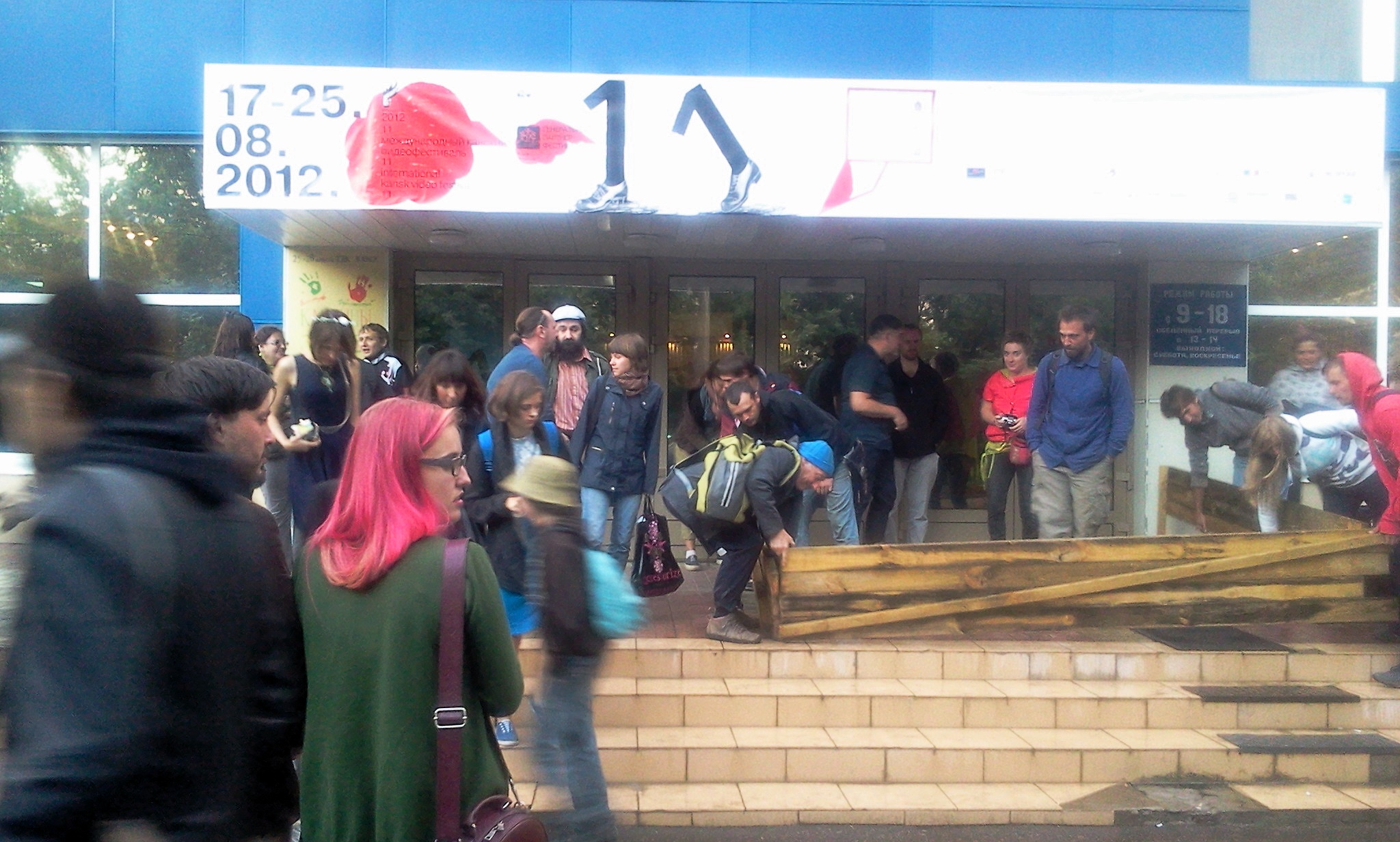
XI Kansk International Video Festival
Kansk/Russia – 17-25 August 2012
2012 Incubarte – Festival for the Arts
Valencia/Spain – 21-24 June 2012 – Jury: Videoart
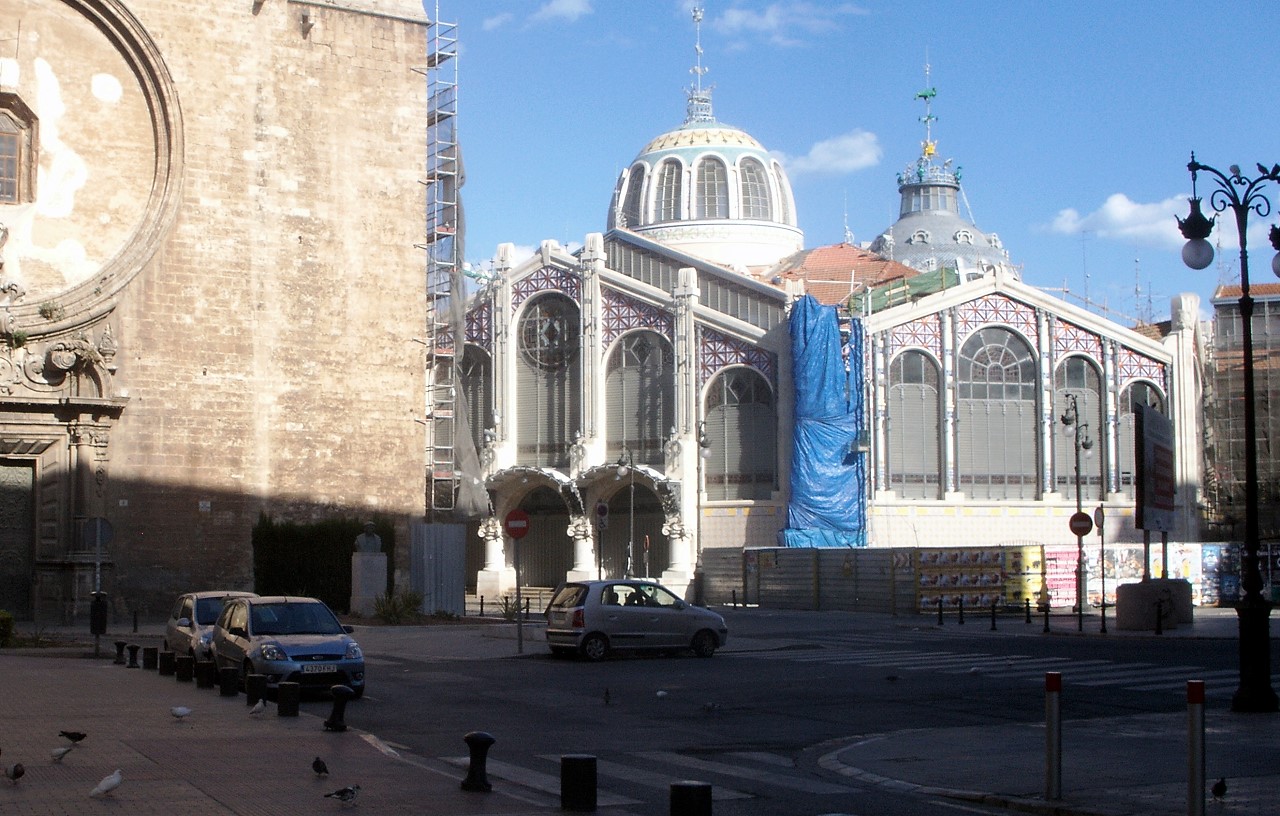
The name Valencia has an ambigous meaning to Wilfried. In 2008, he was participating with his curated exhibition “SoundObjects” in “Digital Media” @ La Nau in Valencia, one of the negative experiences to forget, at best immediately. But then, it is connected to the second visit in 2012 in a positive way, when Wilfried was invited by Empar Cubells, professor at The Politechnical University of Valencia to participate in the event she is organising – “The Hybrid Festival” @ La Naves (21-26 June 2012), a municipal art center. Empar Cubells is one of those video artists who joined Wilfried’s curatorial activities in their early phase in 2004/2005, when he had released VideoChannel – as a platform for curating art & moving images. In Valencia, Wilfried is presenting in the frame-work of the festival not only a selection of “ColognOFF VII – Art & the City”, but he is holding also a lecture/presentation to the audience of students.
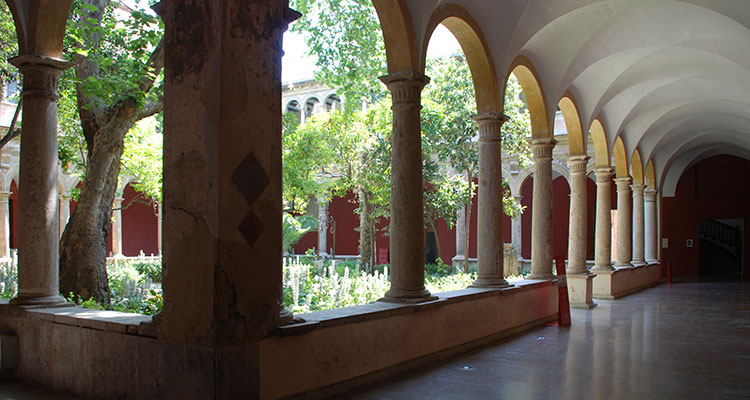 And because he has contacts to another festival taking place at the same time in Valencia – Incubarte 2012, the festival director – Javier Marisco – invites Wilfried to be part of the jury for videoart, in this way Wilfried is learning something from the internal art related structures within Valencia.
Strangely enough, at that time Valencia hadn’t such a positive fame in German media, but Wilfried did not understand why some travelling journalists were neglecting Valencia an attractive place for tourists, so Wilfried finds the city as such with its history and the historical city center really exciting, but – even if Valencia has a kind of metropilitan character, it is provincial as well, not in its negative sense, but in this sense that everything is limited also the cultural structures of the city.
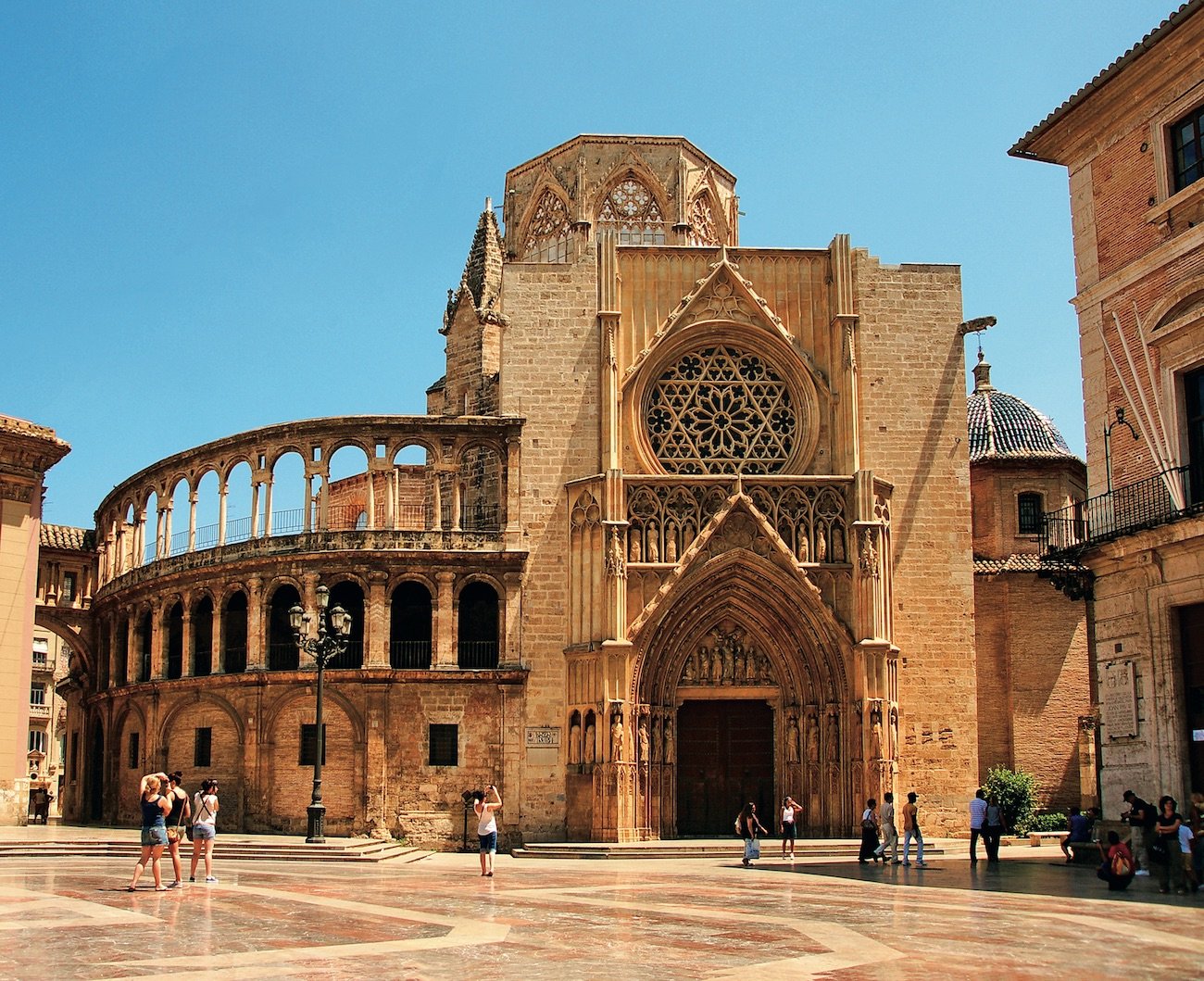 Particular, Incubarte Festival 2012 was showing itself as a devoted event, but it has just local relevance (according to Wilfried’s impression) and particularly the involvement of some international participants is demonstrating this assessment. The exhibition at MUVIM – one of the Valencian museums is reminding Wilfried of the exhibition of local artists he was participating 17 years old in when he was living in Esslingen (Southern Germany) where he grew up. It has the same athmosphere – and a similiar artistic quality. And even if there is a digital and video section. it has that devoted provinciality, which is very sympathic it is own way, but from Wilfried’s point of view – the structure, the concept and the way of organisation has no perspectives, a perception which will be confirmed some years later, because Incubarte will discontinue, and it is often like that, there is no new structure which might have the potential to replace the previous one – and then it is always the same – such initiatives depend always on its “maker”, a person who is deeply engaged in making such activities only possible.
Incubarte – Festival for the Arts Valencia/Spain – 21-24 June 2012 – Jury: Videoart
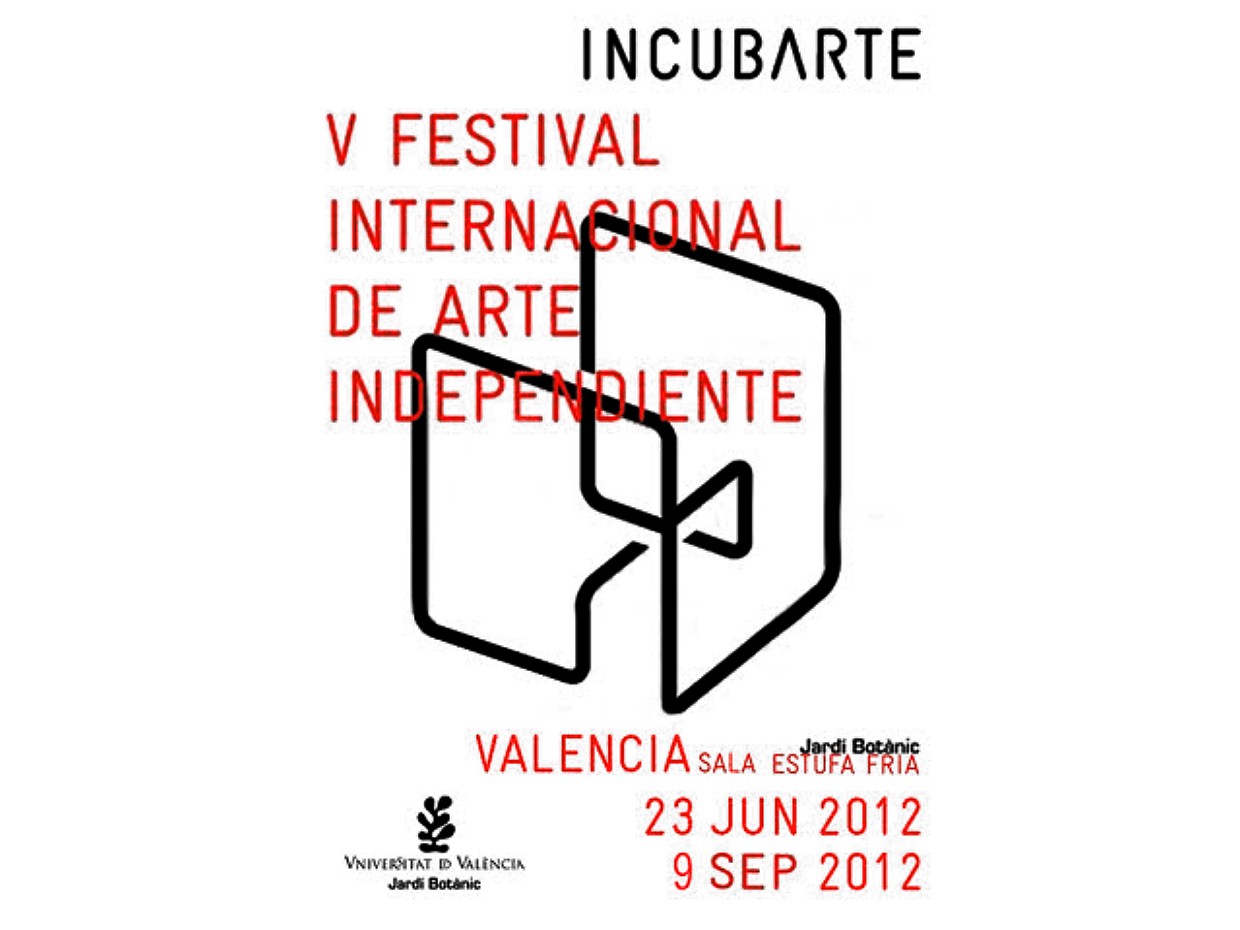
Incubarte 2012, V Festival Internacional de Arte Independiente MuVIM, Valencia. Director :Javier Marisco. Comisarios: Lourdes Casany, Damiá Jordá, Emanuela Loprieno, Jorge Montalvo, Rebeca Plana.
MUVIM – Museo Valenciano de la Ilustración y la Modernidad
INCUBARTE in Valencia is an international Festival of Independent Art which unifies plastic- with visual art. They just create a link between different types oft art and culture like painting, sculpture, instalations, photography and video-arts.
It’s an amazing meeting point of several artists representing their newest works in a nice and cheery ambience, free for sure and open for everyone who wants to see what art can do…
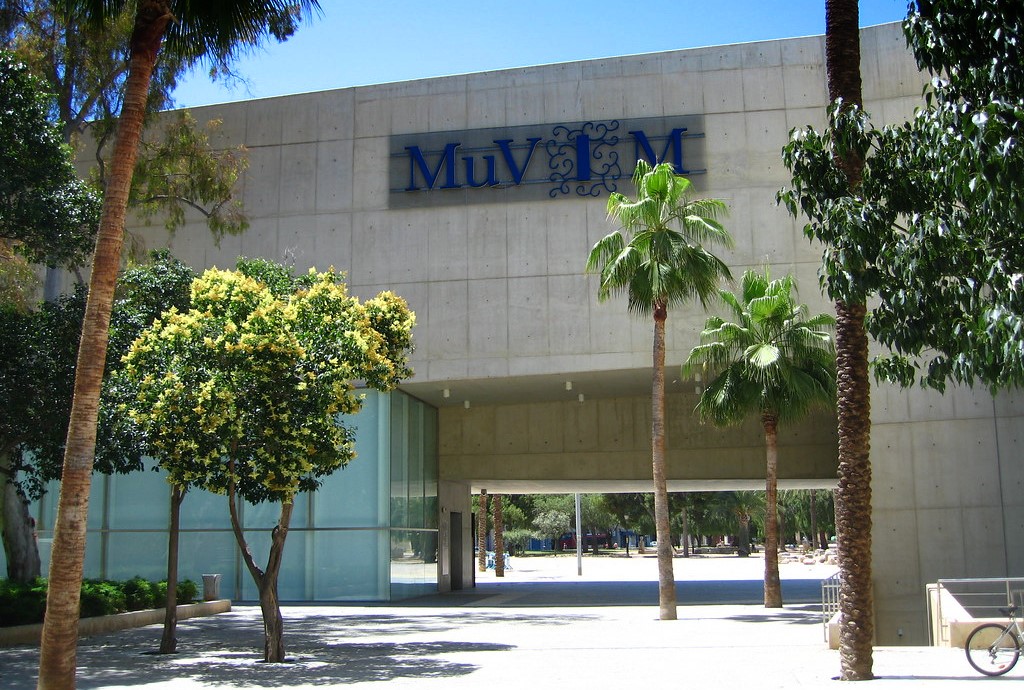
MUVIM – Museo Valenciano de la Ilustración y la Modernidad
Cinema Perpetuum Film Festival Minsk
Minks/Belarus – 16-18 January 2012
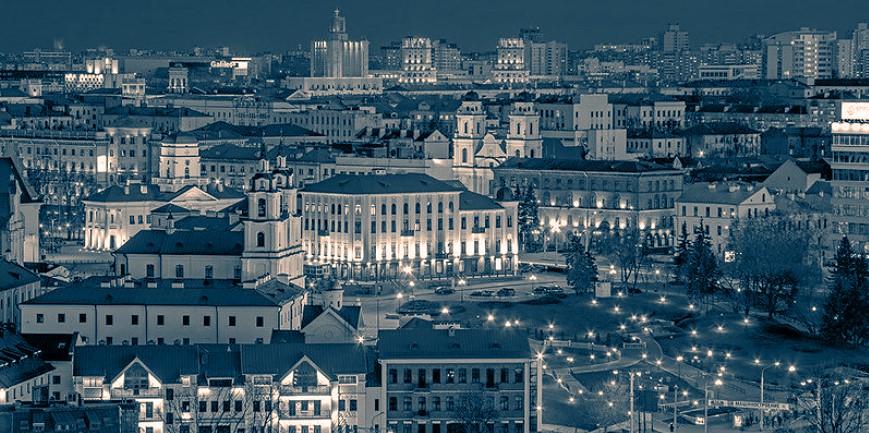
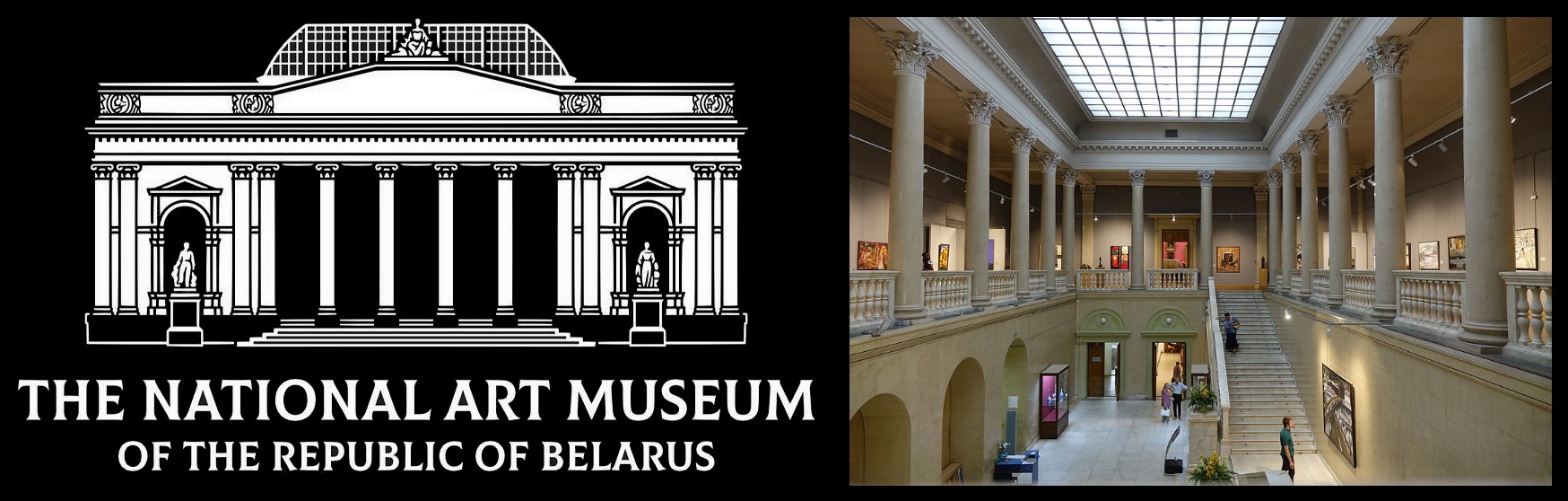
The central festival location was – National Museum of Art Minsk
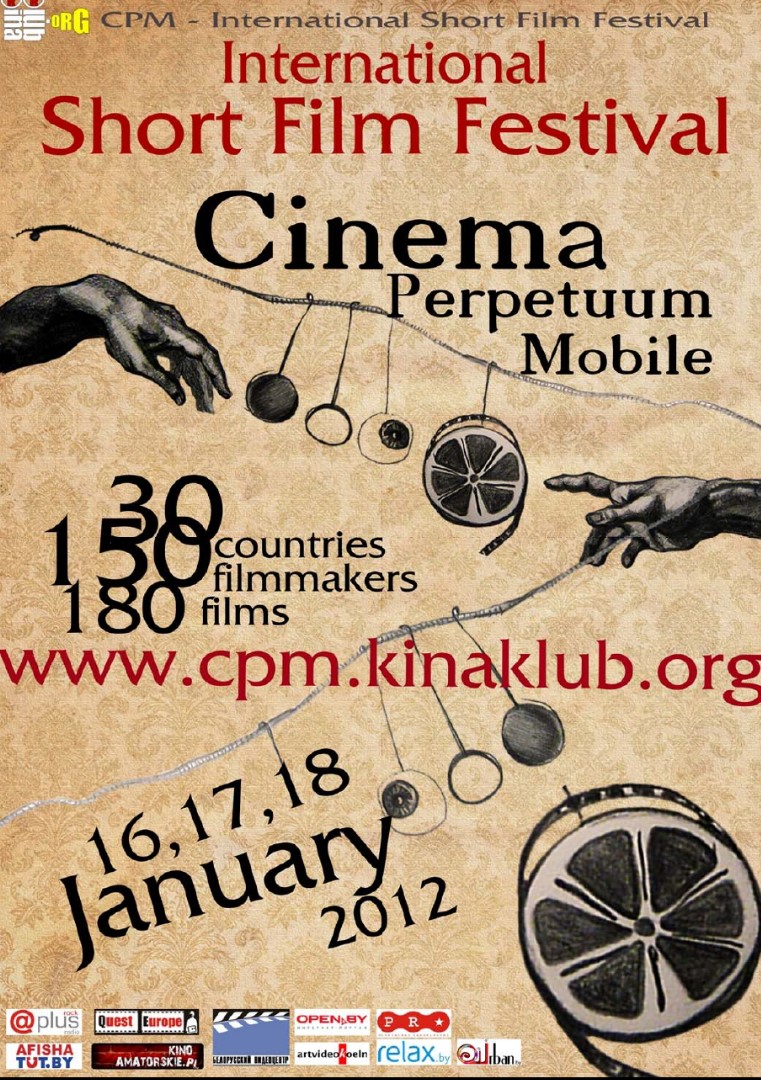
The jury included famous representatives of independent cinema from different countries: director Corey Makeby (USA); Director, head of the network of video galleries ArtVideoKöln, creator of the festival CologneOFF Wilfried Agricola de Colone (Germany); Chairman of the Film Club Federation of Central and Eastern Europe Maciej Gil (Poland); directors Sergey Krasikov (USA) and Bogdana Smirnova (Ukraine) and, of course, representatives of Belarusian cinema: director and screenwriter, member of the European Academy of Cinema Viktor Aslyuk; producer, director Yuri Igrusha; Director, Dean of the Screen Arts Faculty of the Belarusian State Academy of Arts, Professor Pavel Ivanov; film critic, journalist, teacher of the BGAI Galina Shur; screenwriter, playwright, director and publicist Andrei Kureichik.
2011 InOut Festival
@ Laznia – Center for Contemporary Art Gdansk/Pl – 22-23 October 2011
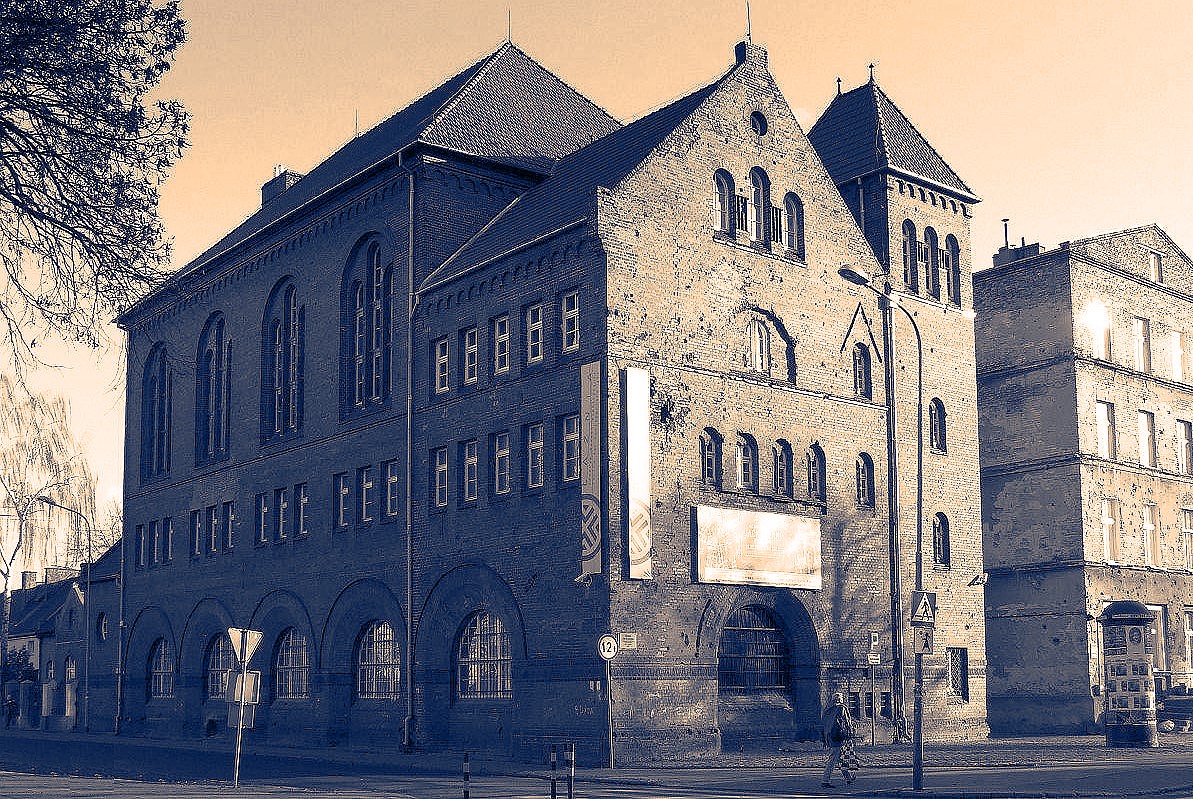


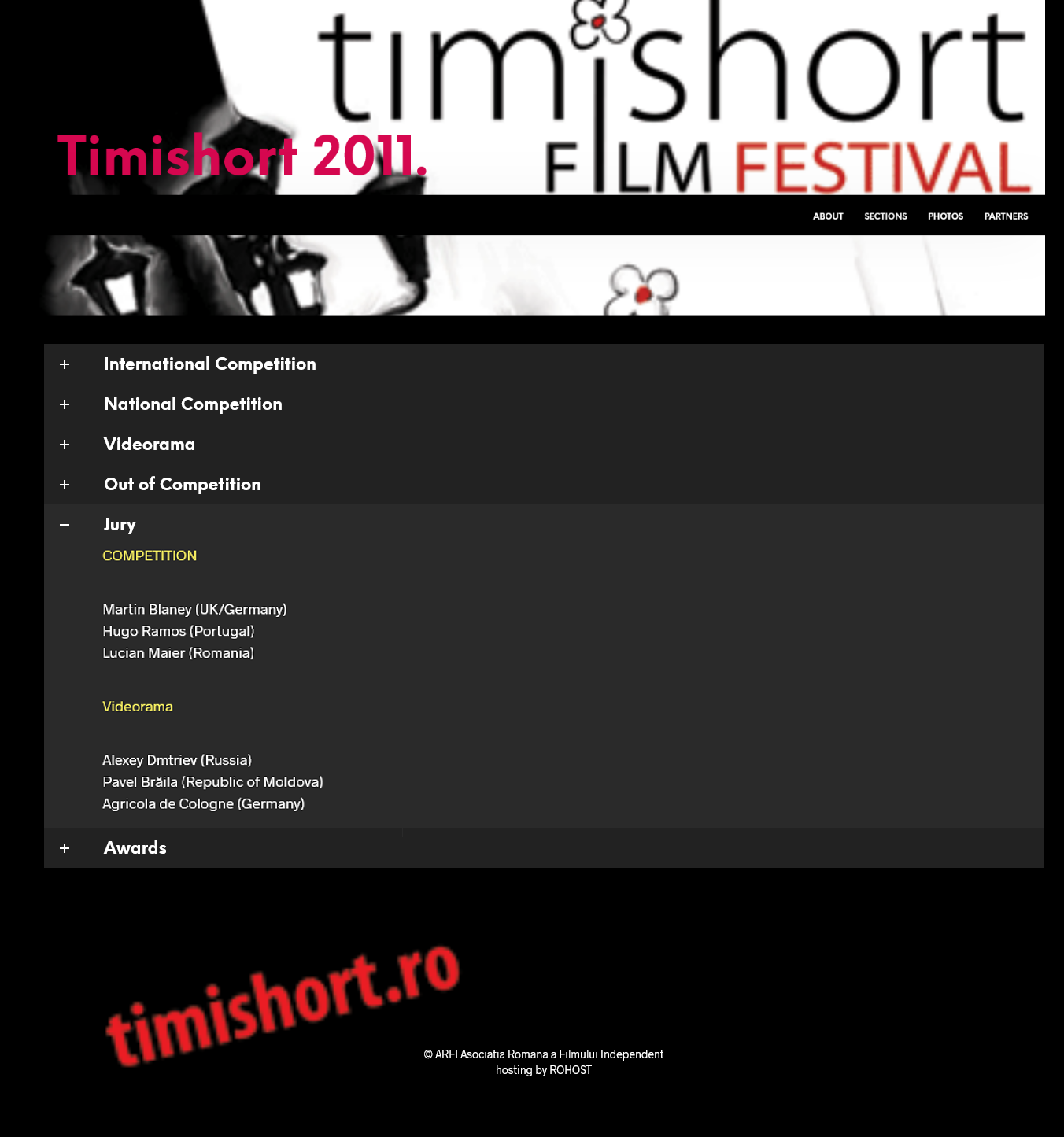
2011 TimiShort Film Festival
Videorama Jury
4-8 May 2011 – Timisoara/Romania
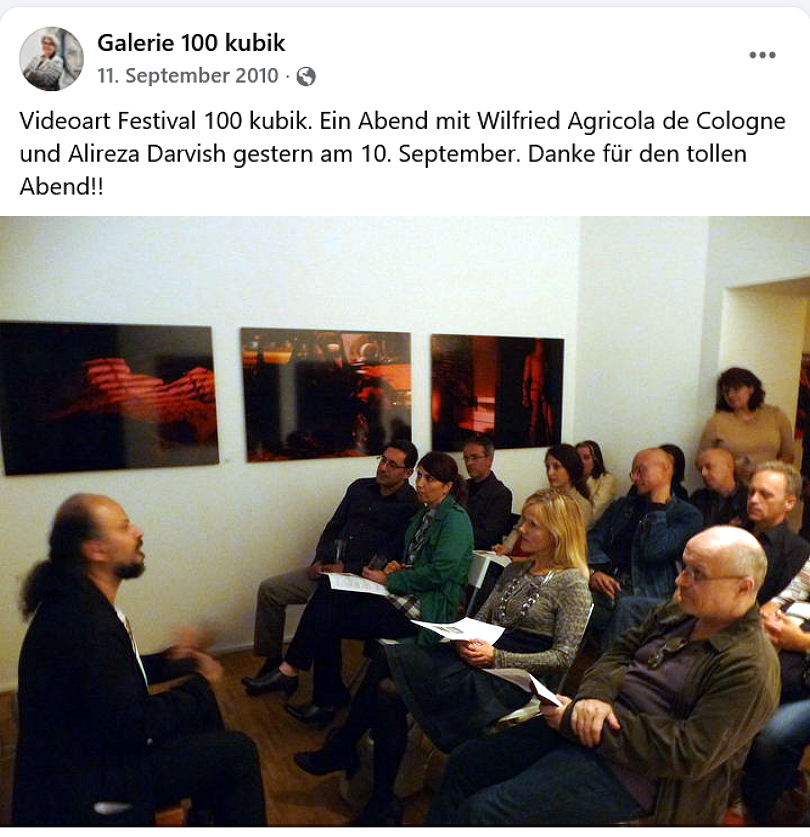
2010 Biennale for Videoart from Spain
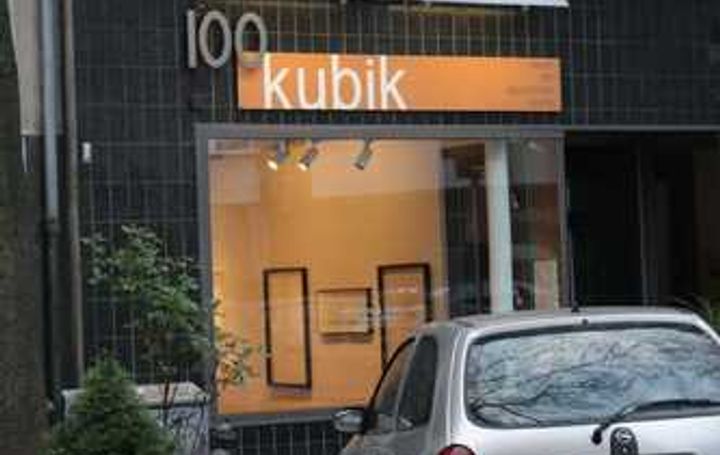
Galerie 100 Kubik Cologne

AWARDS


European Parliament, Culture & Art Project NOASS, Shamir Riga and Riga Ghetto & Latvian Holocaust Museum and artvideokOELN international & Artists for Change
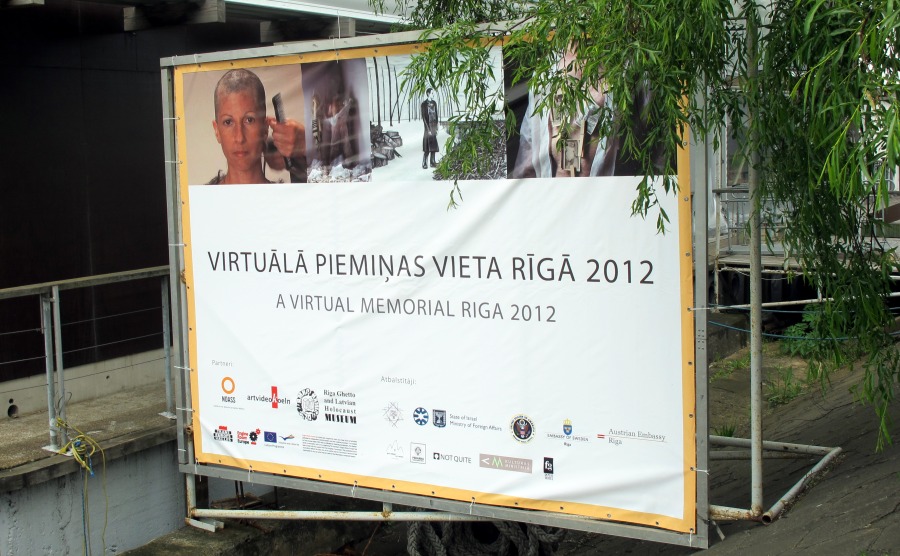
 Under the Patronage of the ~ European Parliament, A Virtual Memorial Riga 2012 is a media art project by Wilfried Agricola de Cologne, media artist aund curator from Cologne/Germany starting in 2012. It is the physical and virtual manifestation of his project “Draft Title: Shoah featuring Shoah Film Collection”, including the preparations for the physical event during Agricola de Cologne’s residency at NOASS (Riga) 1-31 May 2012, the realisation of the physical event – 1-30 June 2012 including creating the virtual presence, and the post-event era forming the project online to become the virtual memorial including Riga as a place for Jewish life and the manifestation of “A Virtual Memorial”.The project is dedicated to the victims of Riga Ghetto and Rumbula Forest Ghetto and Nazism.
In this way, “A Virtual Memorial Riga 2012” became a common project of all participating artists, the involved hosting instances, the supporters and the audience. Depending on their involvement, each of them has a more or less individual active function, resulting a common media art project, which would not have happened or exist without them. One might speak, they were the tools for creating the physical and virtual art work.
https://riga2012.nmartproject.net/
https://ateamartistsforchange.wordpress.com
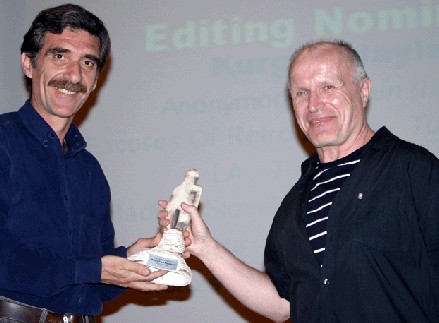
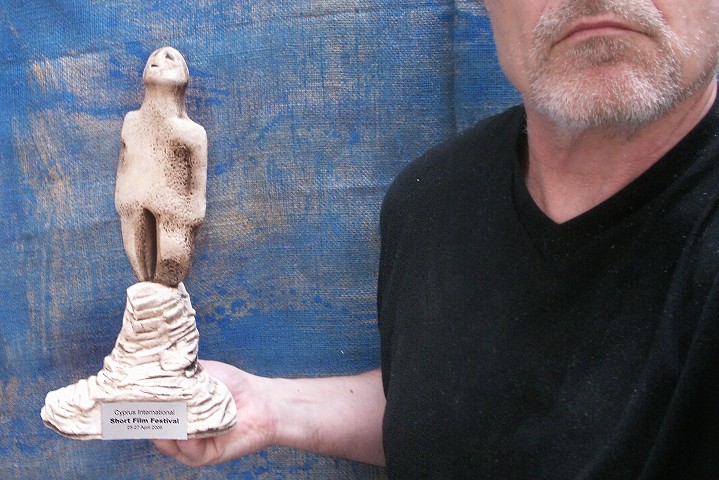
Special Jury Award – category “best experimental film”
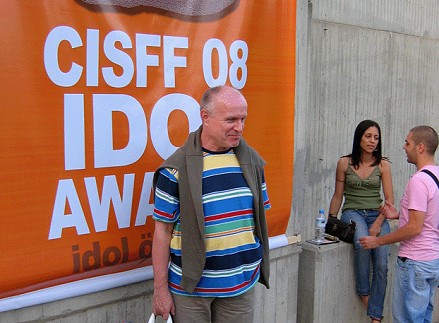
1st International Cyprus Film Festival April 2008
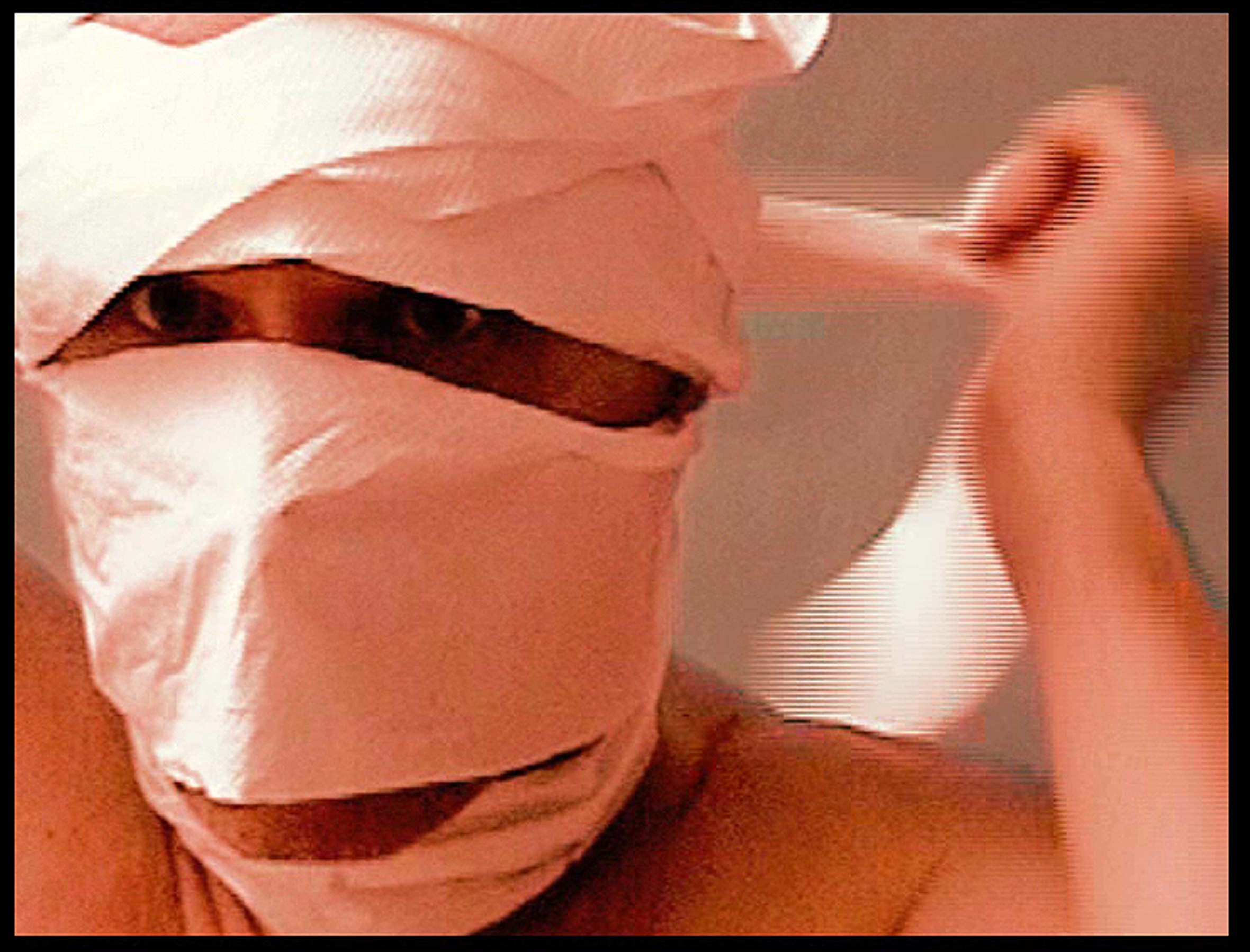
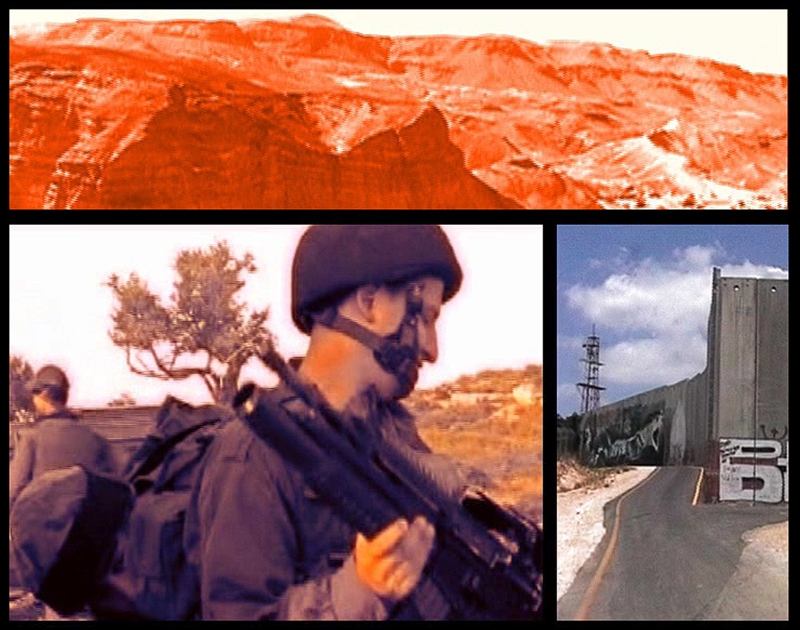
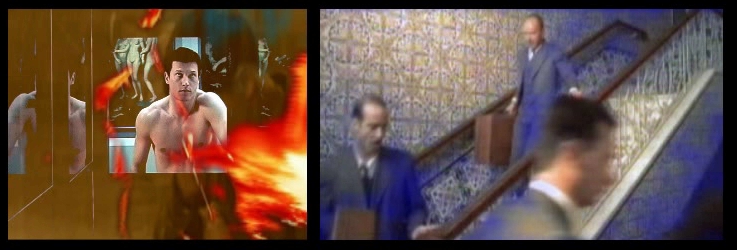
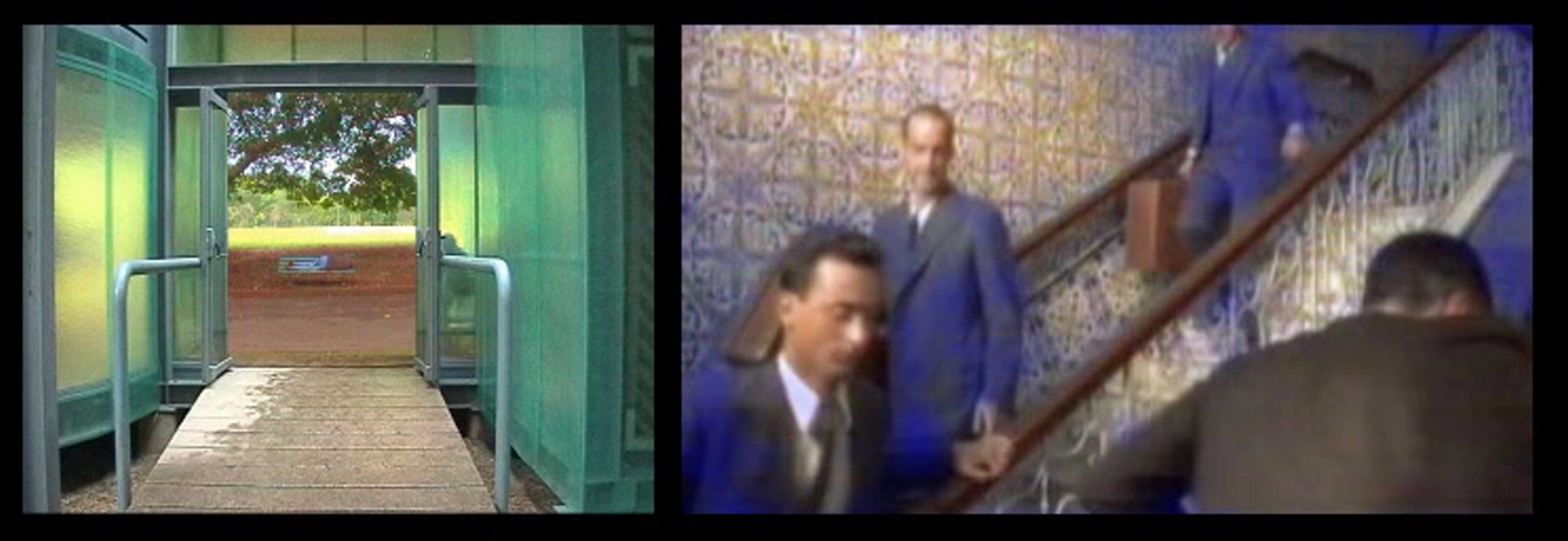
One Day on Mars
A human being is obliged to spend at least one day in his lifetime on Mars. Mars the red desert planet, Mars the god of war. Mars can be anywhere, any place which is identified with the inhuman, violence, hate, rage, revenge and despair.
Agricola de Cologne filmed the original material 2006 during a visit in Palestine & Israel.
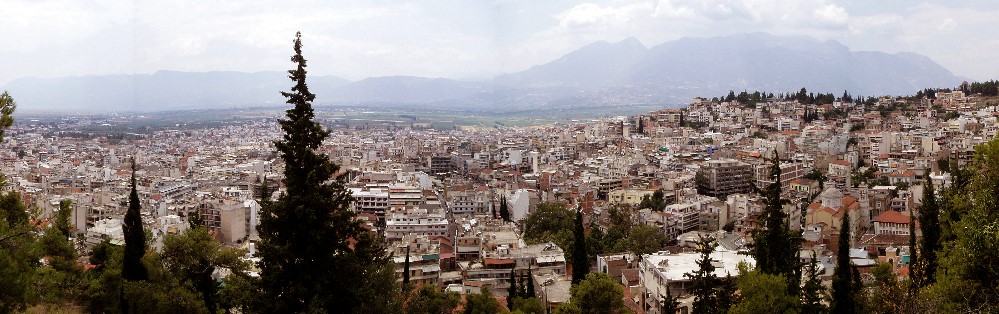
Bele Arte Lamia Festival Greece
videoart award – high commendation
Bareback – serial DIScharge, 2007, 6:00
The experimental film tells the story of a homeless person, who lost its identity in all the traumatic experiences it was undergoing. Again, Agricola de Cologne uses the form of the allegorical representation for pointing to essential questions of human existence. All people are homeless in on or the other way, most however, suffer from it without being aware of it. The film is a mirror of our time which has lost its roots.
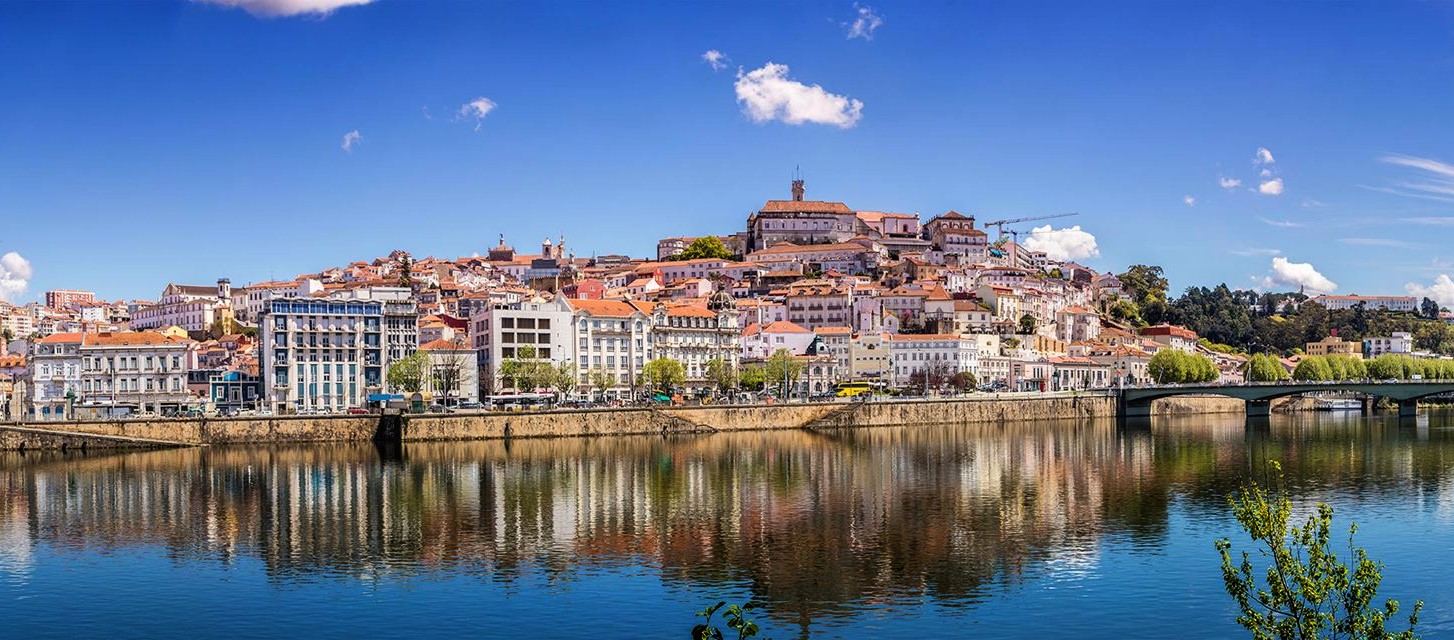

FONLAD Video Award 2007
Fonlad – Digital Art Festival Coimbra/Pt
Bareback – serial DIScharge, 2007, 6:00
The experimental film tells the story of a homeless person, who lost its identity in all the traumatic experiences it was undergoing. Again, Agricola de Cologne uses the form of the allegorical representation for pointing to essential questions of human existence. All people are homeless in on or the other way, most however, suffer from it without being aware of it. The film is a mirror of our time which has lost its roots.
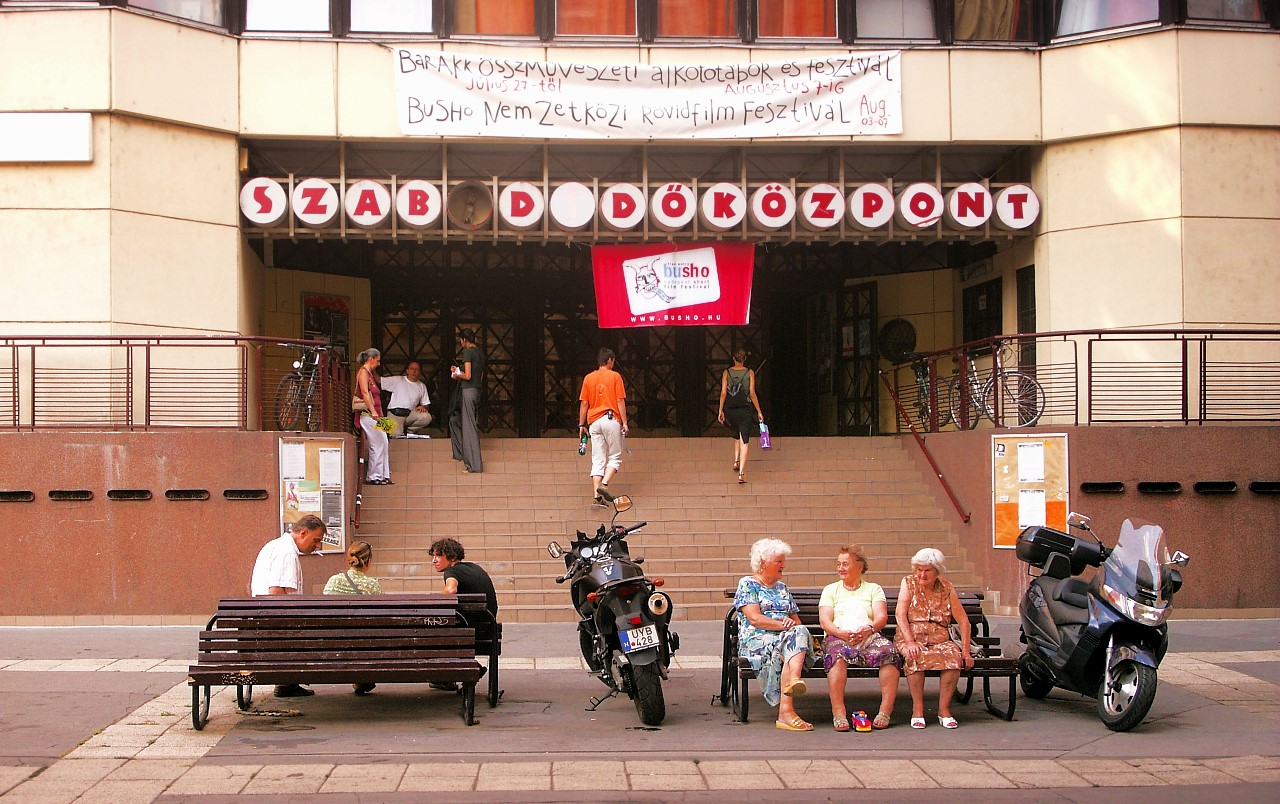
Best Experimental Film
3rd Budapest International Shortfilm Festival
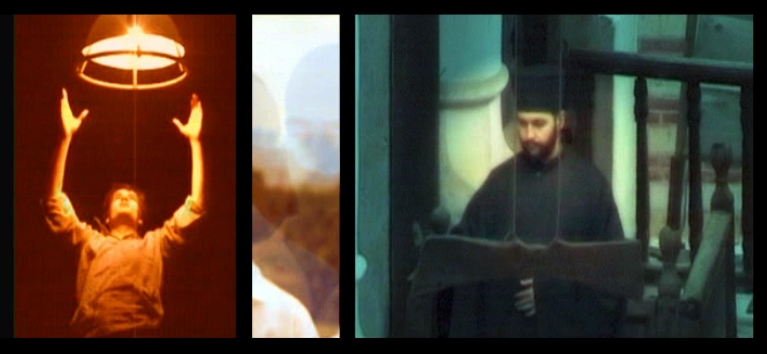
Synopsis
The video tells the story of the human desire to be as close to truth as possible. But who ever will succeed while living a life dominated by the fast running time and endless searching?
If there is any paradise, then monks or people really resting within themselves find a paradise close to truth close to GOD. But it is only truth people are believing in. Is there absolute truth?
The video consists of three sections, a spiritual and a physical section and the acting level, the artist who is filming the scene, an intruder who become witness of a ritual of truth.
This basic video was filmed in 2003 at the Rila Monastery, the spiritual centre of Bulgaria.
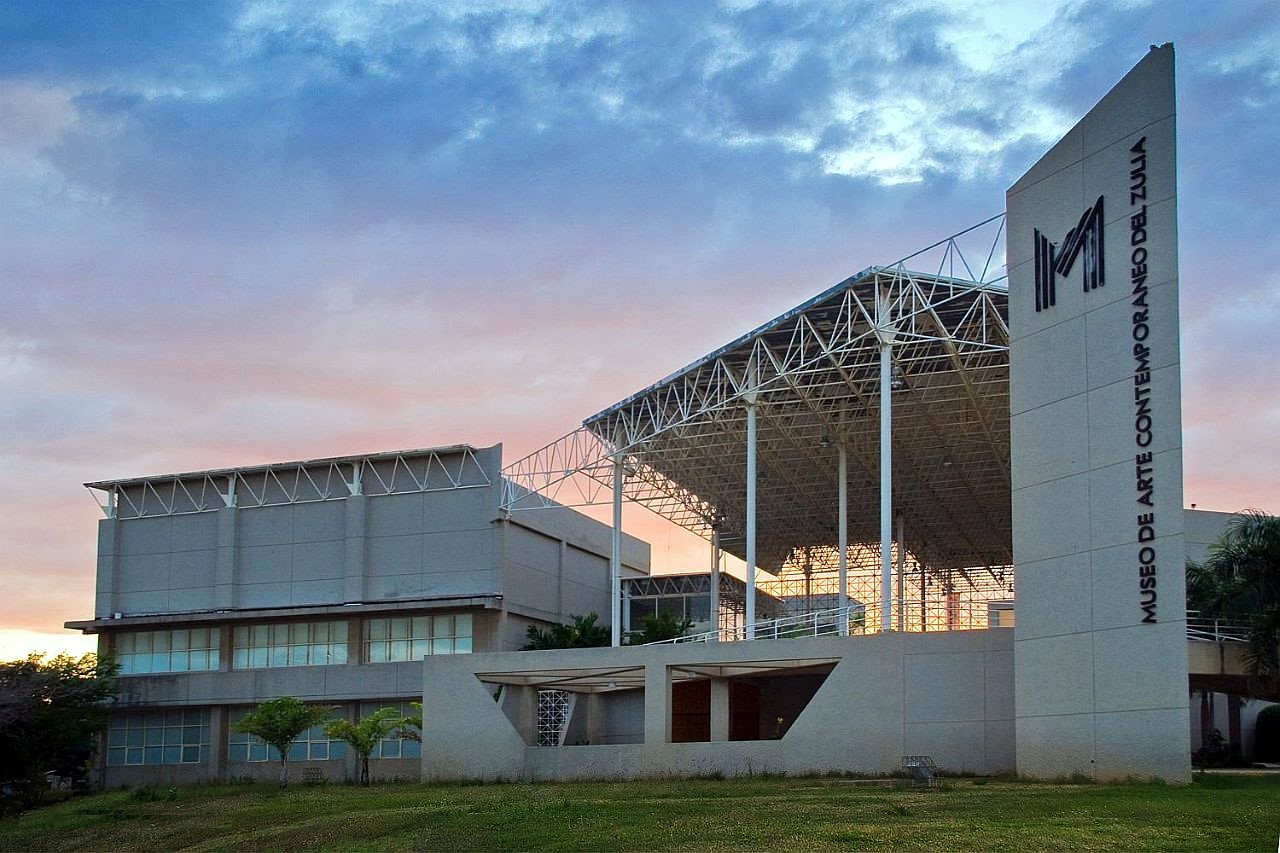
1st Prize of Digital Art Festival @ Museum of Contemporary Art Zulia Maracaibo
V Salon de Arte Digital” Maracaibo/Venezuela – 1-9 October 2006
Violence Online Festival and the artistic work on the subject of violence
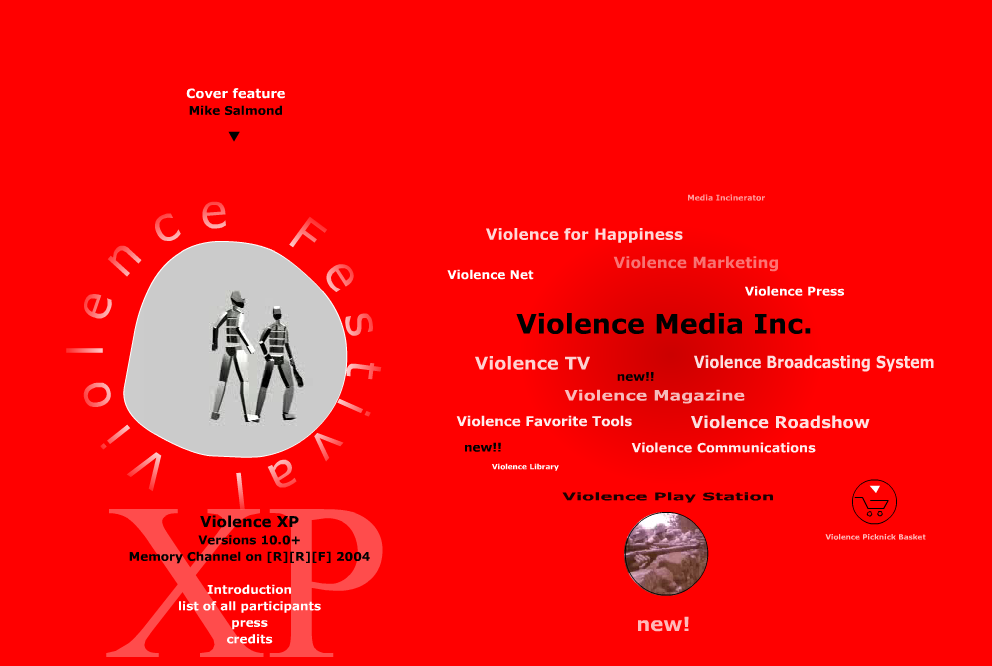
5th Salon de Arte Digital Maracaibo/Venezuela 1-8 October 2006 – Violence Online Festival
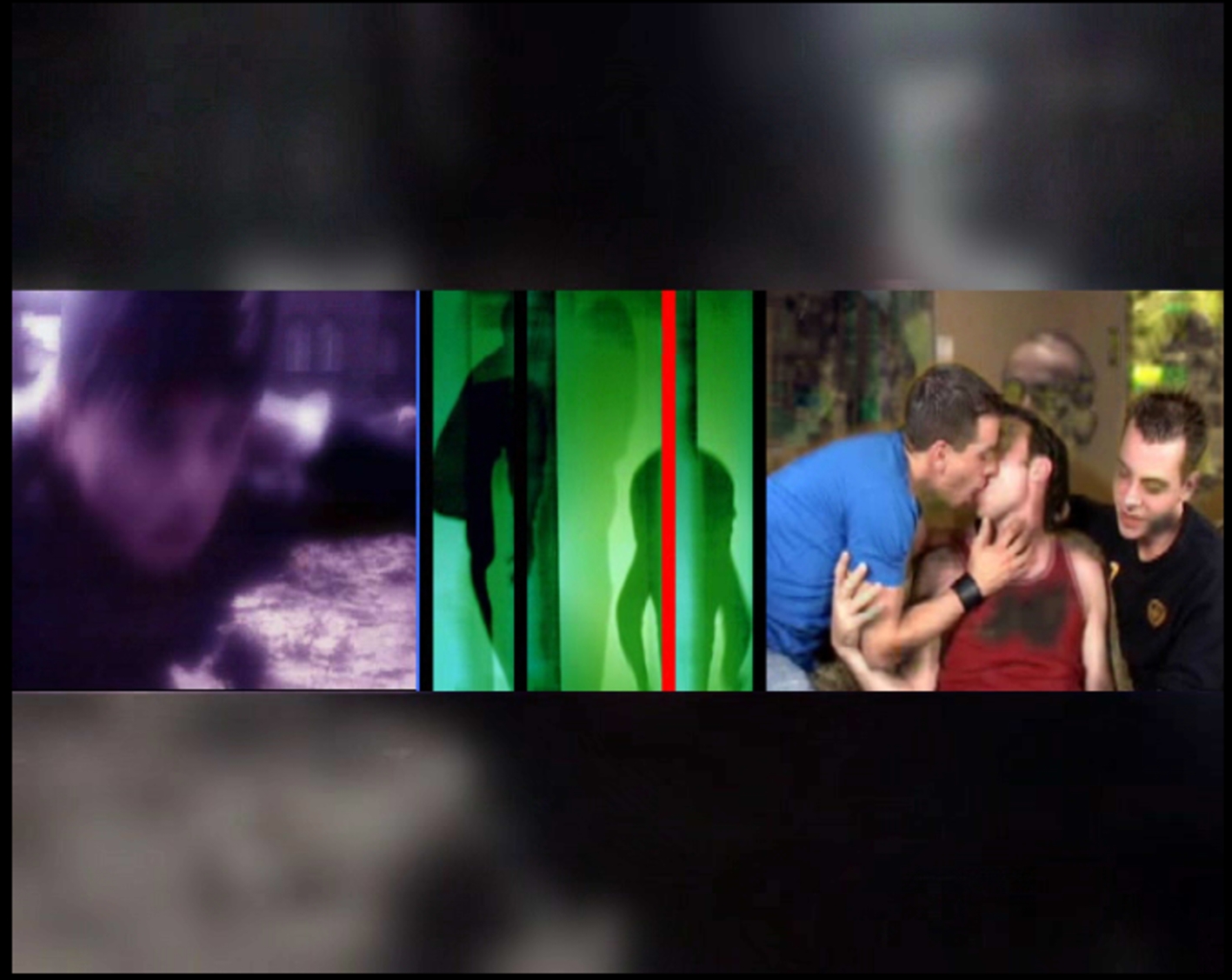
House of Tomorrow
House of Tomorrow, 2005, 3:10
The house of tomorrow is the house of one’s identity, it does not need to be a concrete house or building, but represents a secure and protected place where people can stand for what they are and represent, a human being. And this human may have many identities in different fields, the sexual identity represents only one among many others.
House of Tomorrow, 2005, 3:10
The house of tomorrow is the house of one’s identity, it does not need to be a concrete house or building, but represents a secure and protected place where people can stand for what they are and represent, a human being. And this human may have many identities in different fields, the sexual identity represents only one among many others.
Biennale of Electronic Art

Family Portrait
receives MOSAICA Award 2005 – https://www.mosaica.ca/ – on the theme: Jews and Diaspora
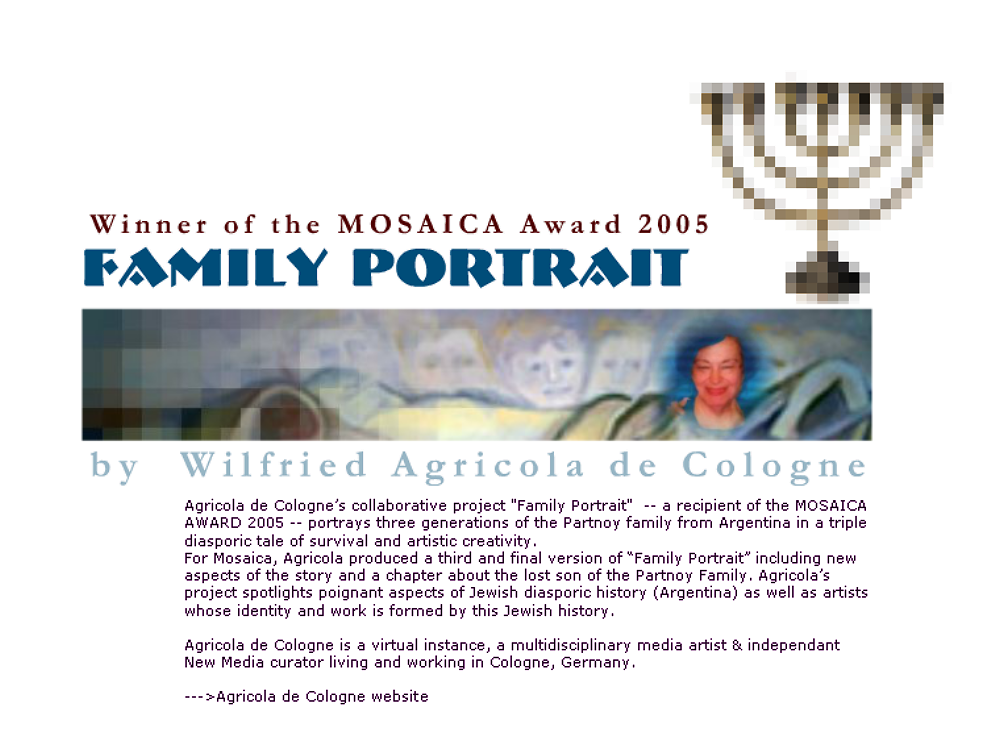
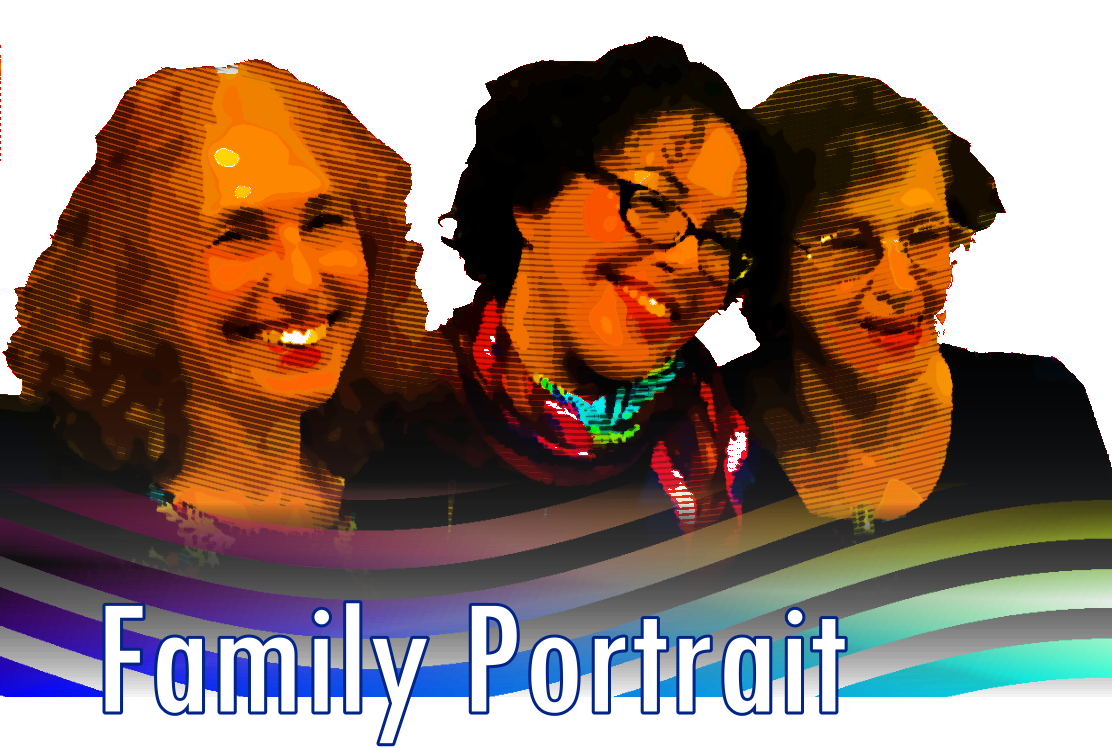
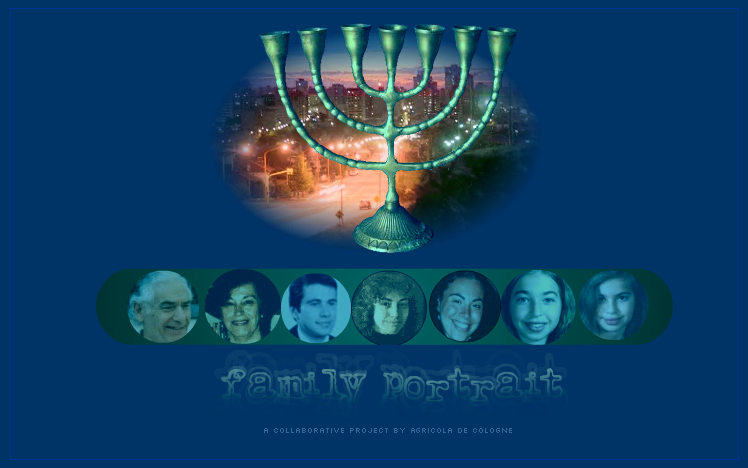
Family Portrait
A Portrait of the Argentine family Partnoy which was captured by the dark shadows of the Argentine past.
In the center =>
Mother, daughter and grand daughter of the Partnoy Family – who survived the so called Argentine Holocaust.
The project created 2003-2005. focussing on the historical background and the work of these three visual artists and poets is a collaborative work between the 3 family members and Agricola de Cologne.
Agricola de Cologne’s collaborative project “Family Portrait” portrays three generations of the Partnoy family from Argentina in a triple diasporic tale of survival and artistic creativity. The Partnoys escaped persecution in Europe, fleeing to Argentina where they were once again persecuted during the so-called Argentine holocaust during the military dictatorships. After being “disappeared” and imprisoned in Argentina, Alicia (Raquel’s daughter) and her family found asylum in USA, where later in 1994 also Raquel and her husband Salomón emigrated to, and they all live now as visual artists, writers and poets.
In the framework of MOSAIC AWARD 2005, Agricola produced a third and final version of “Family Portrait” including new aspects of the story and a chapter about the lost son of the Partnoy Family. Agricola’s project spotlights poignant aspects of Jewish diasporadic history (Argentina) as well as artists whose identity and work is formed by this Jewish history.
Biennale of Electronic Art
Central TAFE’s Artist in Residence Perth/Australia September/October 2004
2004 – Biennale of Electronic Art Perth/Australia / 7 September – 17 November 2004
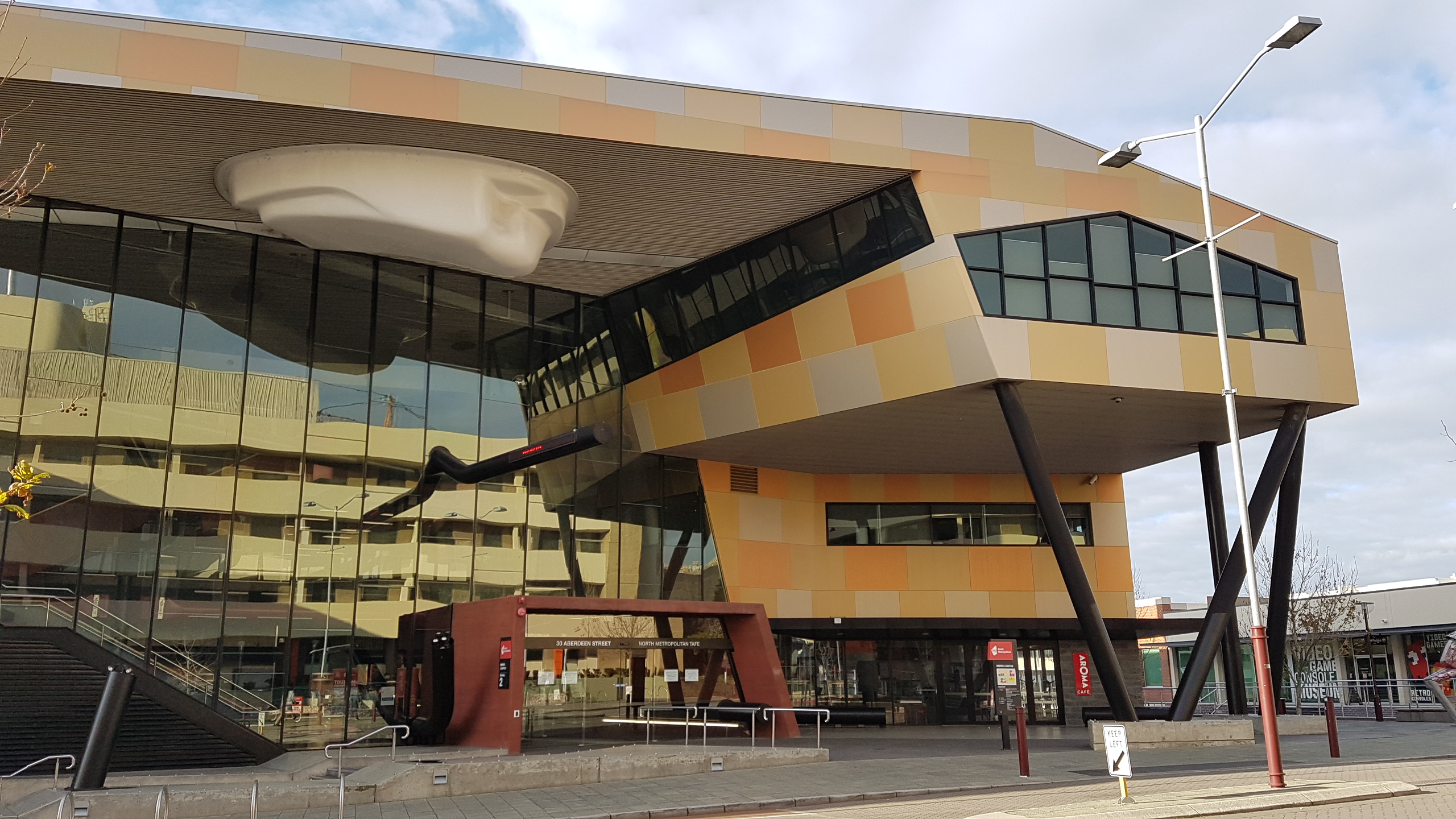
The RRF Project @ Central TAFE – artist in residence gallery
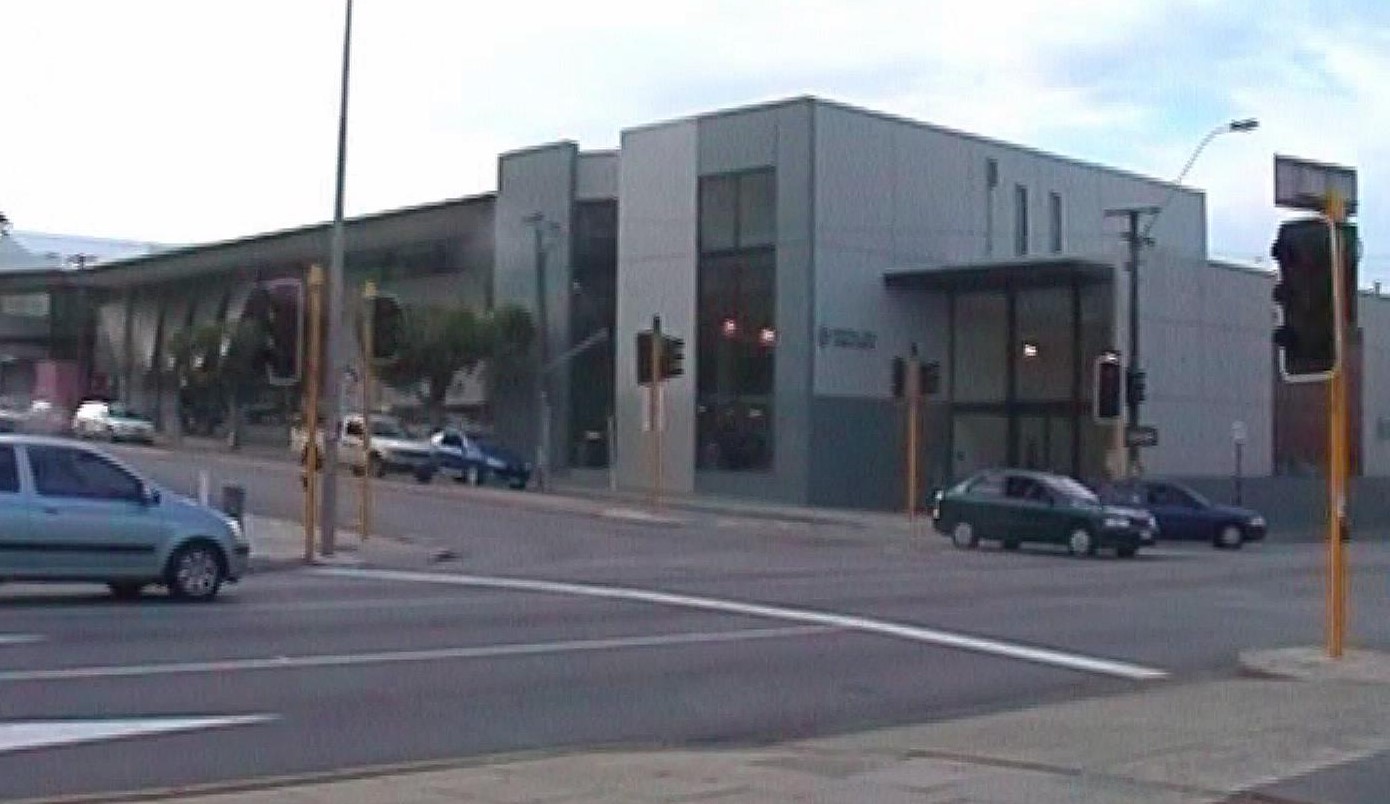
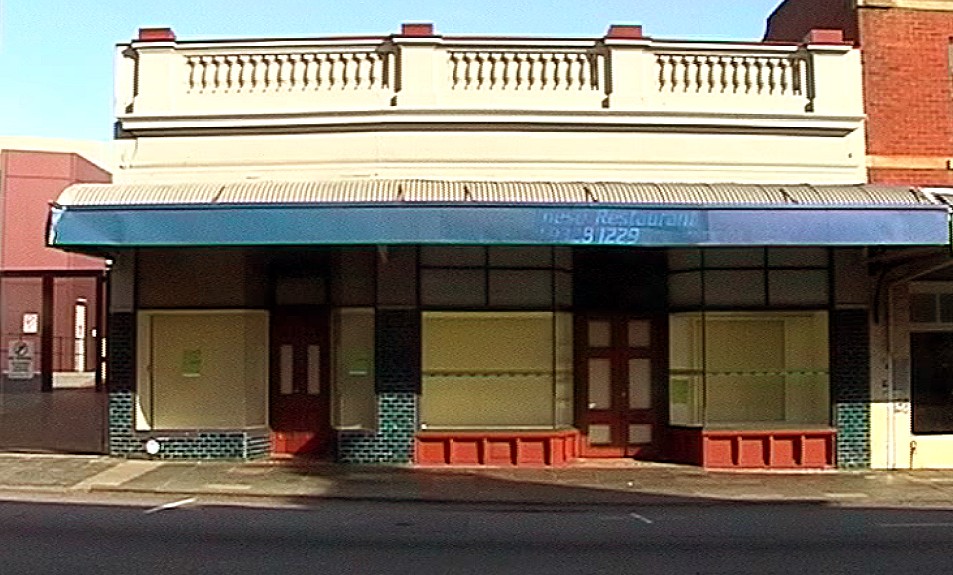
Artist-in-Residence North Metro TAFE149 Beaufort Street, Perth, Western AustraliaNM TAFE’s Artist-in-Residence is located within the School of Creative Industries, Perth, Australia. The Artist-in-Residence fronts Beaufort Street and comprises living quarters: (2 bedrooms/office), kitchen, laundry, bathroom, living area and courtyard. In addition a spacious studio is attached: a wet area/kitchen and a double shop front which can be used for exhibiting or working or both. The residency is located within the Cultural Centre precinct, serviced by the CAT free bus and within close walking distance to the Art Gallery of Western Australia, the Perth Institute of Contemporary Art (PICA), the Alexander Library, the Western Australian Museum and the entertainment and dining mecca of Northbridge.Invited artists.
 Proposals from designers, artists, craft and media practitioners, musicians and organisations who wish to apply to use the premises are invited. Successful applicants will contribute to the to the cultural enrichment of the college and the ongoing education program of Creative Industries students at NM TAFE by exhibiting their work or opening their studios, and conducting public programs such as artist talks and workshops for students and the wider community. Applicants can seek access to accommodation and/or studio. We also facilitate non residential applicants who want to work within the school, immersed in our amazing ceramic, jewellery, print or sculpture studios or use the shopfront as an exhibition or project space.
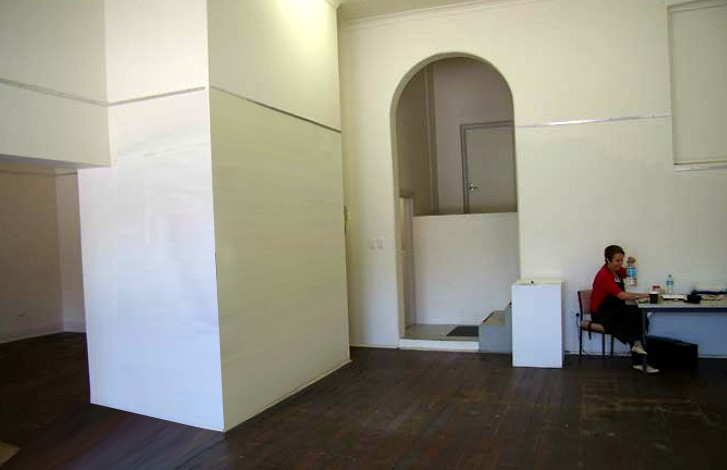
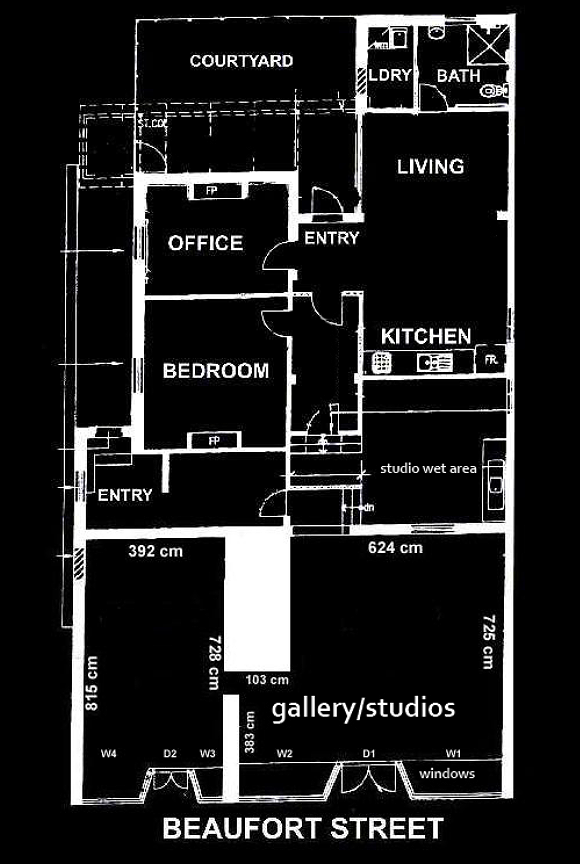

[R][R][F] 200X —> XP // Remembering-Repressing-Forgetting – the global networking project
has been realised by Wilfried Agricola de Cologne on occasion and invitation of BEAP 2004 – Biennale of Electronic Art taking place between 7 September and 12 November 2004 in Perth/Australia.
The printed catalogue is available as PDF

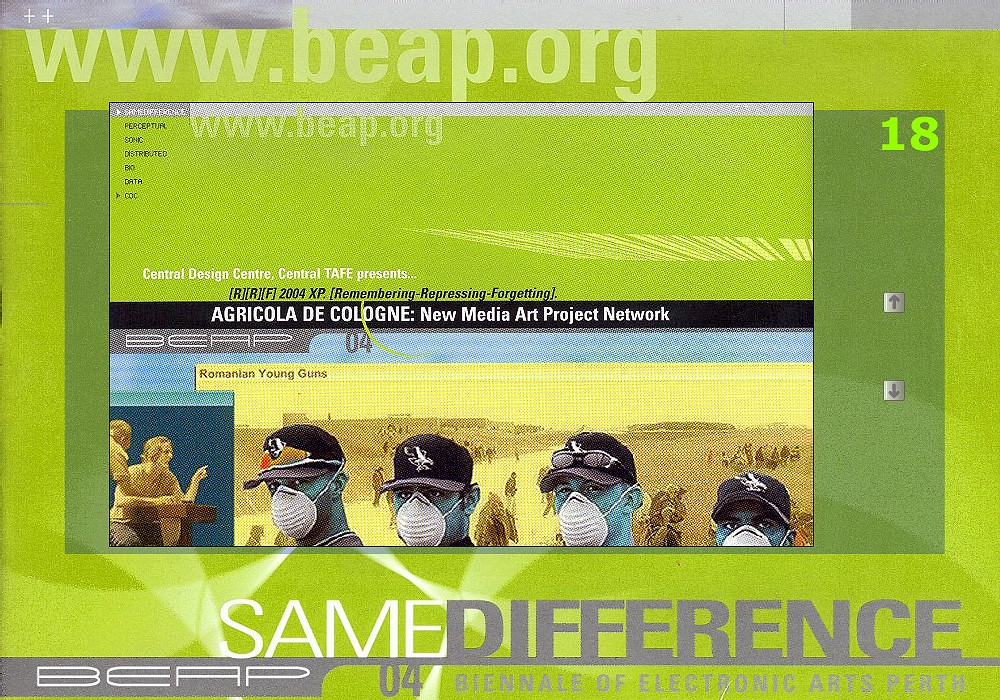
Agricola de Cologne was requested to create a global networking project dealing with the phenomenon of “memory” in avariety of different aspects. The global aspect is manifesting itself in the Location of the Internet based project, as such, in the concept to research how people from different contries rooted in different cultures, religions and social background deal with memory, by including artists and curators from different countries, cultural, religious and social background. It was the idea to demonstrate this dealing via different “memory channels”, each one dedicated to a different artistic digital medium.
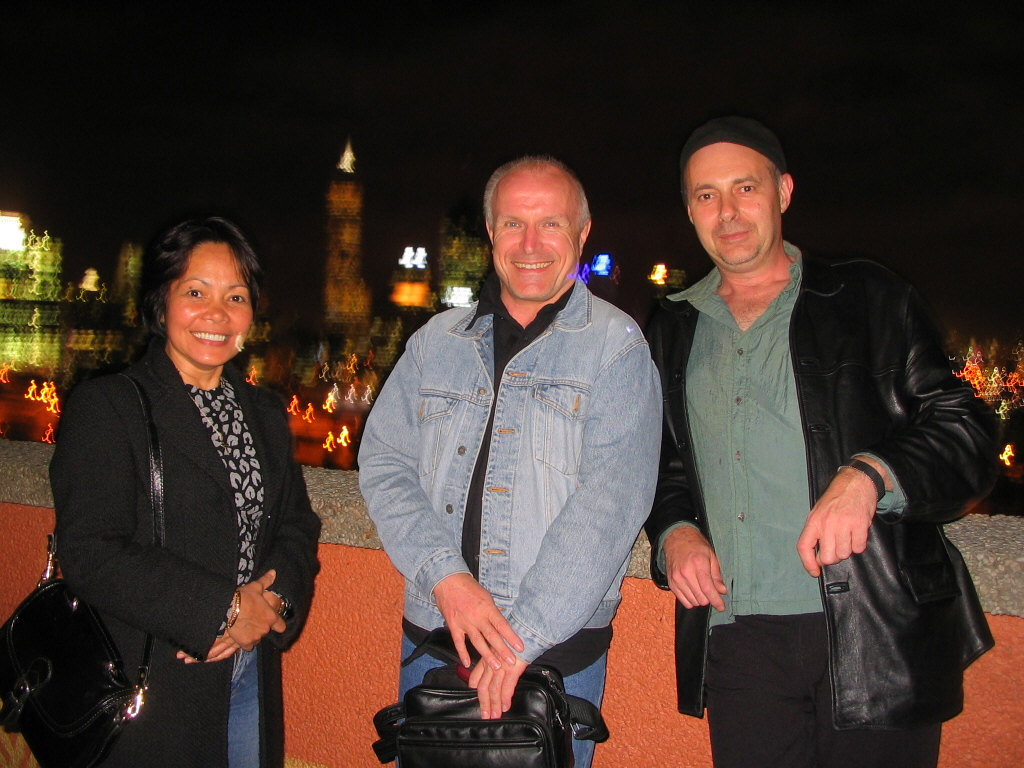
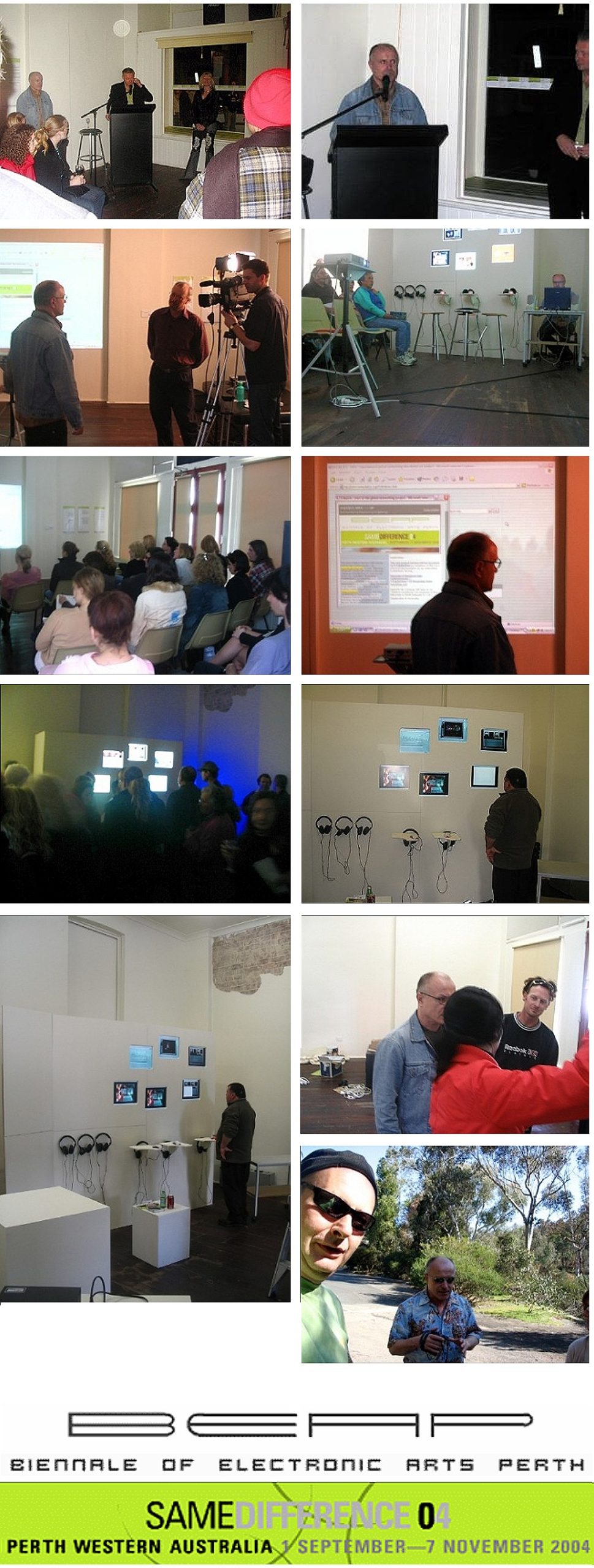
BAEP 2004: Beap curator Jeremy Blank (right) & Agricola de Cologne (center)
While the Biennale exhibitions were installed at numerous art places and institutes, Agricola de Cologne was installed at the artist in residence gallery @ Central Taffe Institute of Technology Perth/Australia in an exchange between virtual and physical space, where he also was an artist in residence. Wilfried’s work was curated by Jeremy Blank, at that time teacher at Central Tafe School for Art, Design & Media which is also running the Artist in Residence Gallery.
Concept of The RRF Project installation
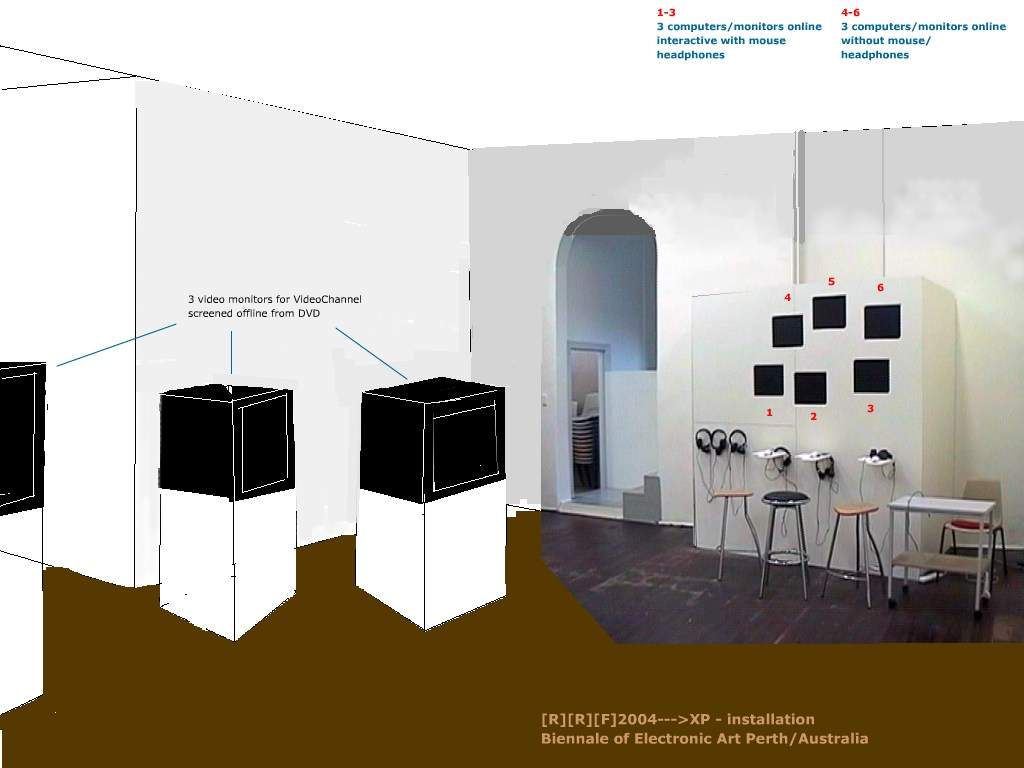
Inauguration, presentation and installation

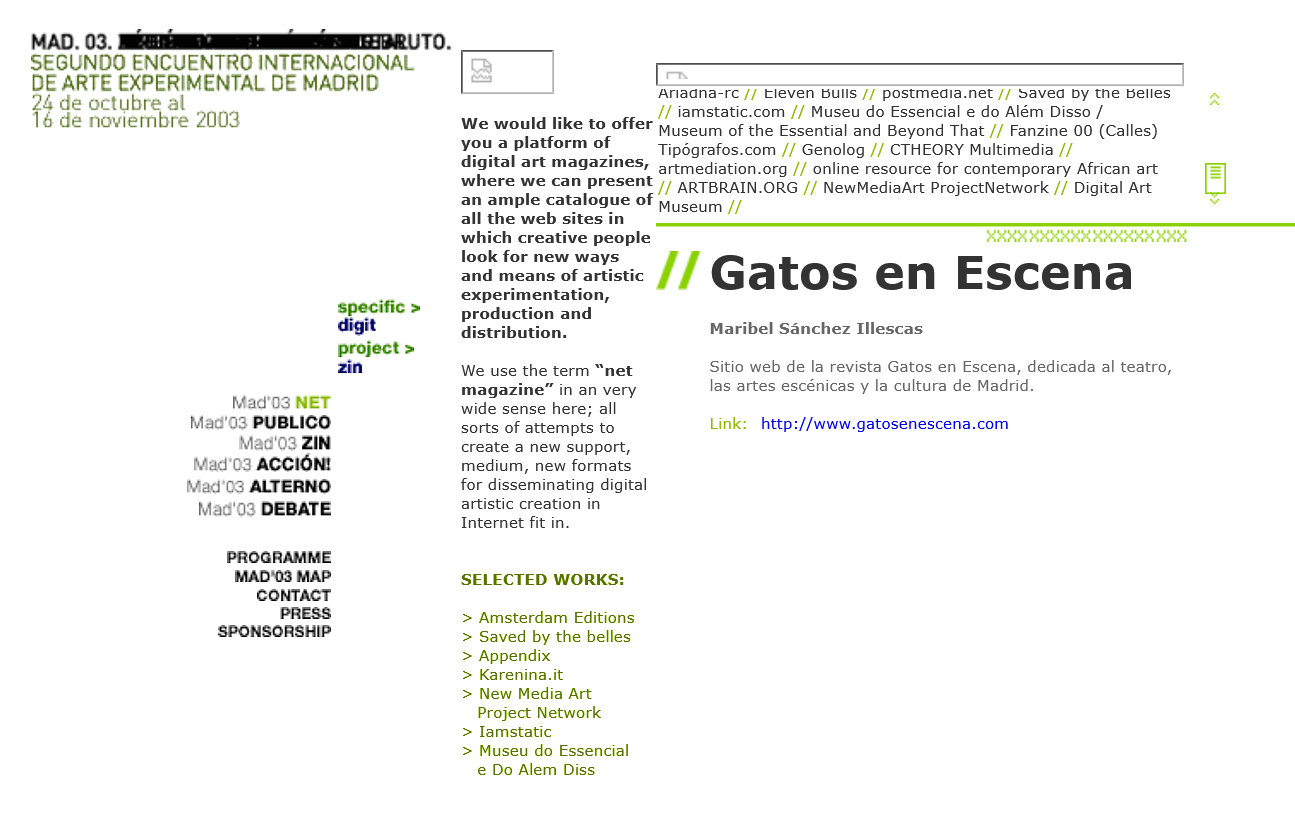
Award in the category NetZin at MAD03 Festival Madrid/Spain – https://www.nmartproject.net/
MAD’03 – Festival of Experimental Arts was held in Madrid on 24 October – 16 November 2003.
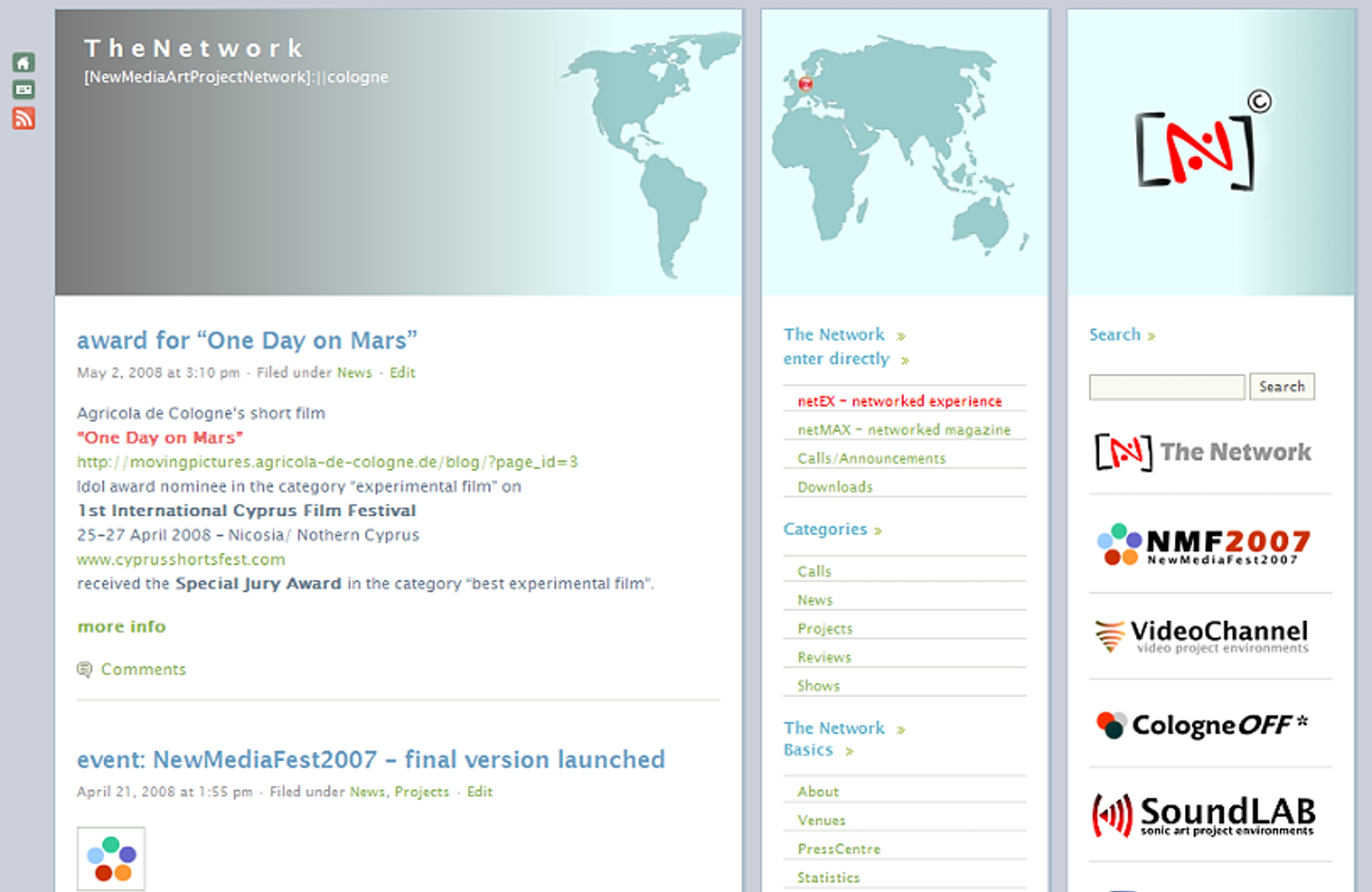

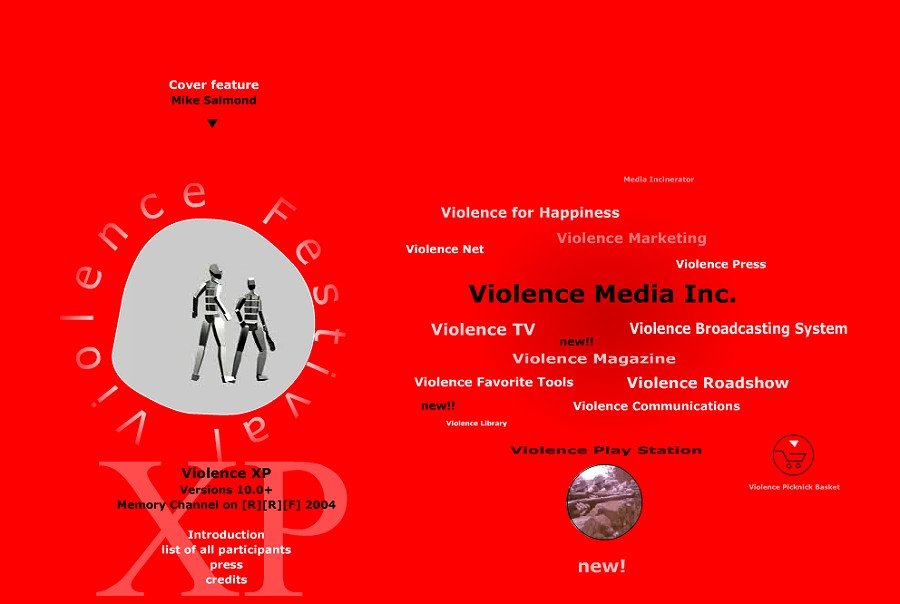
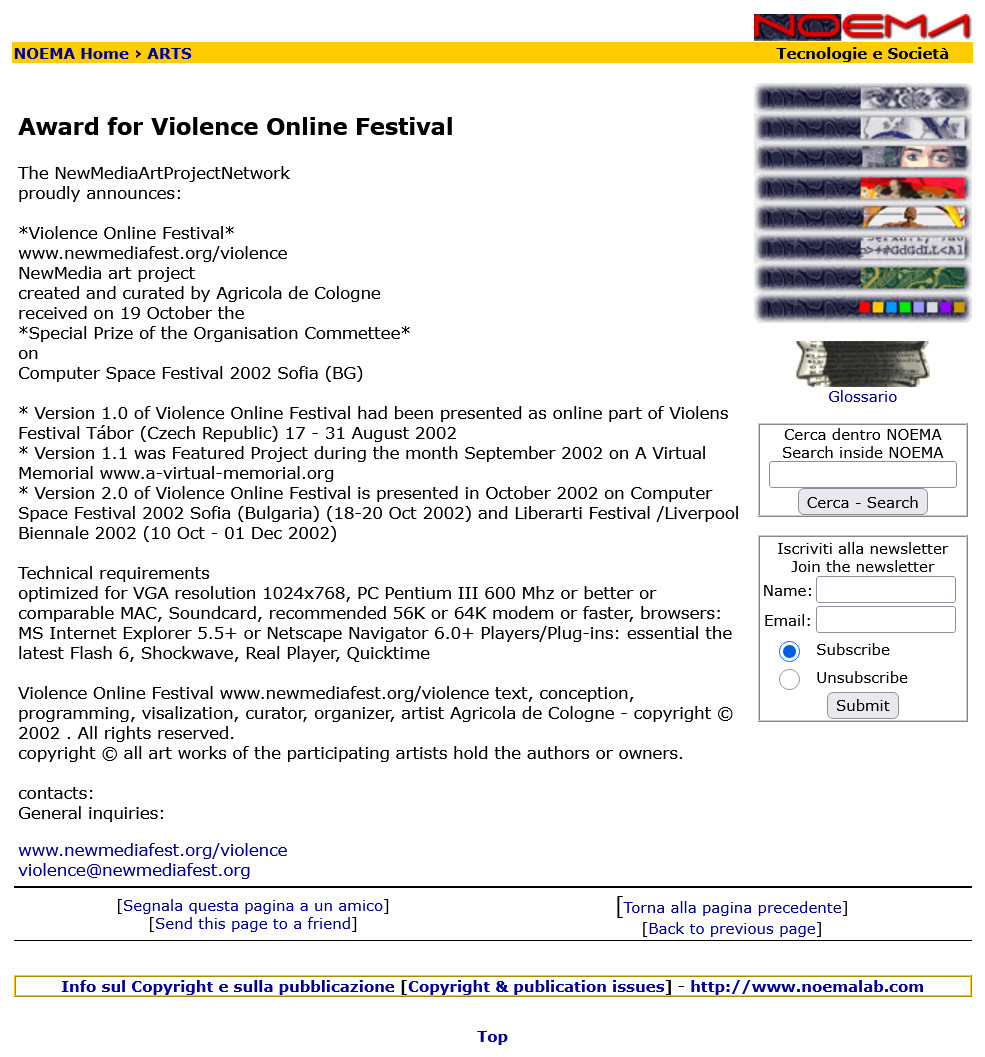
*Violence Online Festival
Special Price of the OOrganizationCommittee -Computer Space Festival 2002 Sofia (Bg) /violencenmartproject.net.

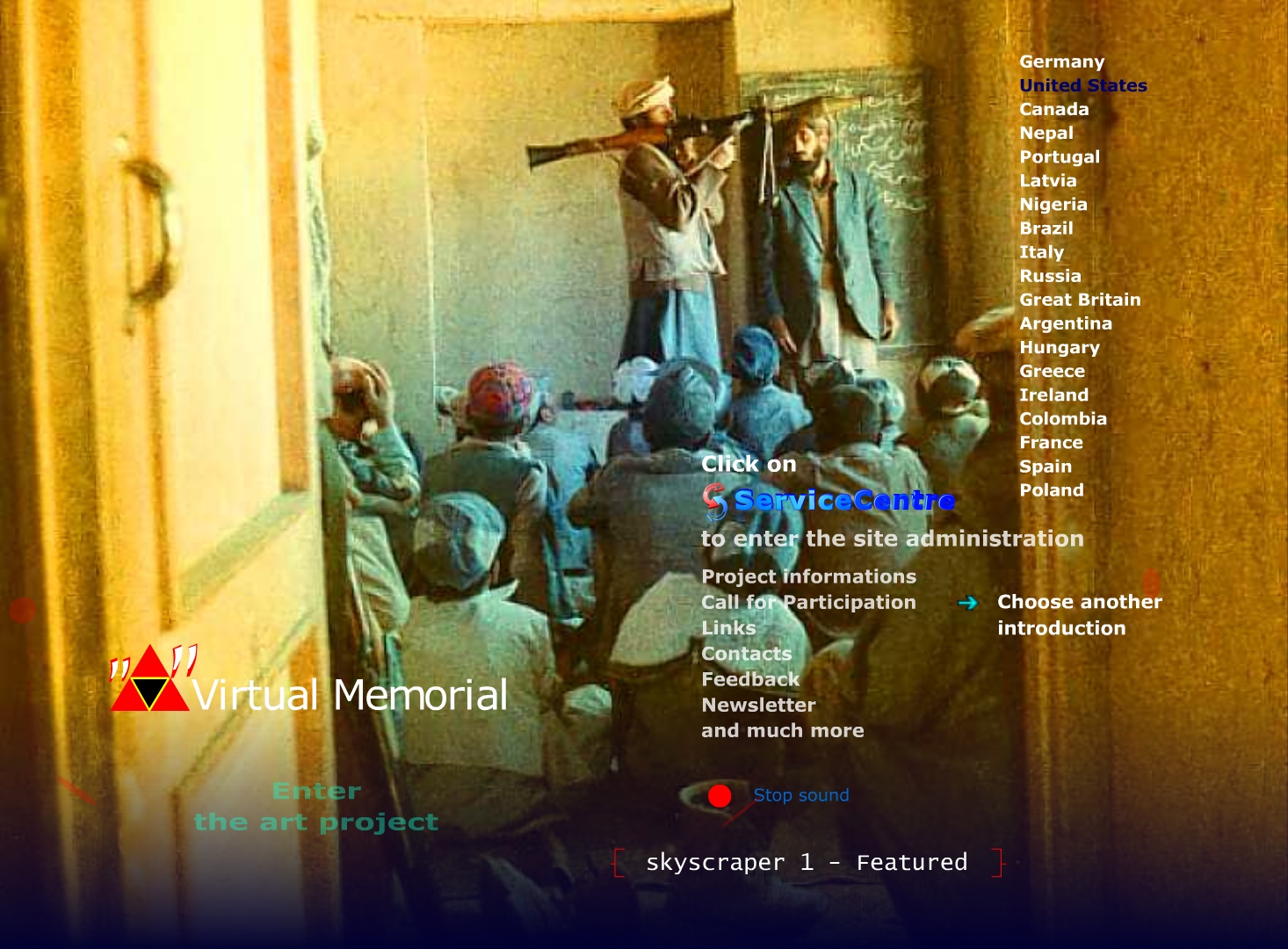
A Virtual Memorial
http://www.a-virtual-memorial.org/ –
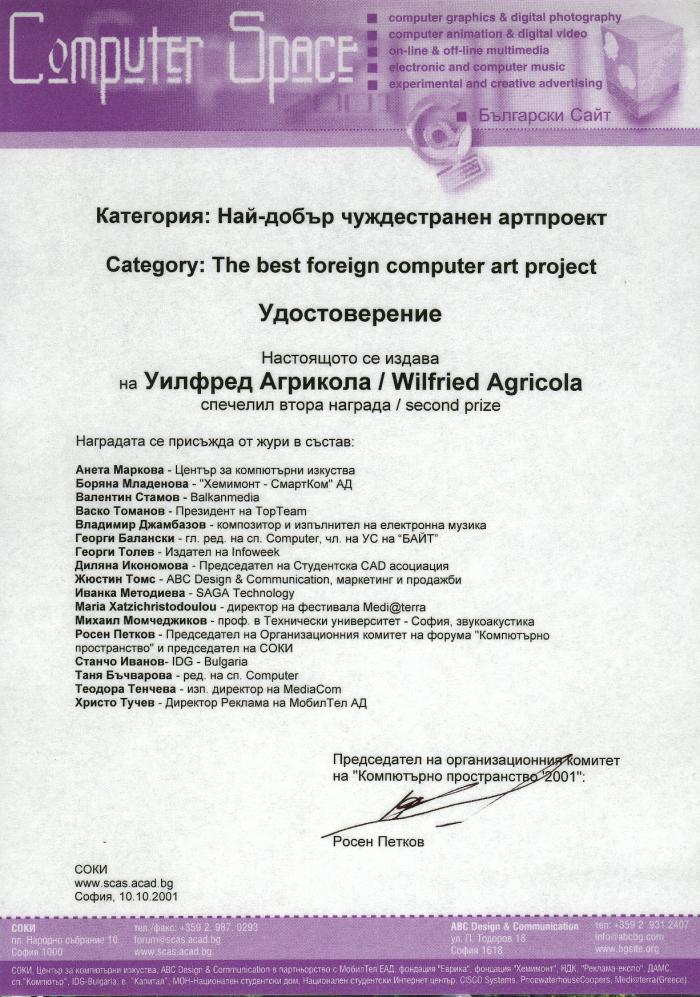
Prize for best foreign multimedia project on Computer Space Festival 2001 Sofia (Bulgaria)
.